







What's Happening?
China has introduced new regulations that complicate the operations and potential exits of American companies within its borders. These rules are part of a broader strategy to counteract U.S. export controls on high-tech goods. The regulations include
measures that allow the Chinese government to investigate companies that disrupt 'normal transactions' or enforce U.S. laws outside the U.S. This could lead to penalties such as asset seizures in China. Additionally, American managers in China could face personal liabilities, including visa cancellations and criminal charges, for violating these rules. The move is seen as a response to ongoing trade tensions between the U.S. and China, with the latter aiming to leverage its market importance to influence American business decisions.
Why It's Important?
The new regulations could significantly impact U.S. companies operating in China, forcing them to navigate a complex legal landscape that pits compliance with U.S. laws against potential penalties in China. This situation could lead to increased operational risks and costs for American businesses, potentially affecting their global supply chains and profitability. The rules may also deter new investments from U.S. firms, as the threat of legal and financial repercussions grows. This development underscores the escalating trade tensions between the two economic giants and highlights the challenges of conducting business in a politically charged environment.
What's Next?
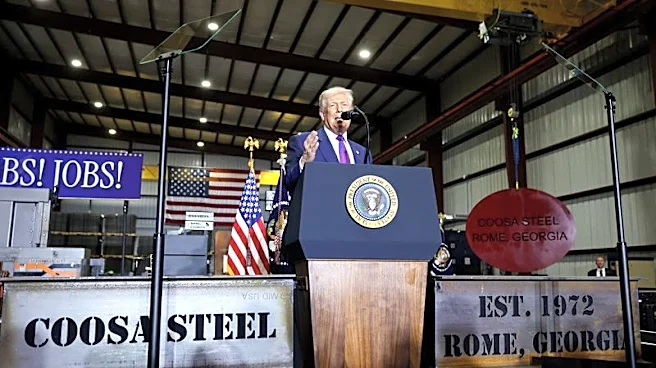
As the situation unfolds, U.S. companies may need to reassess their strategies in China, possibly accelerating efforts to diversify their supply chains and reduce dependency on the Chinese market. The upcoming visit of President Trump to Beijing could provide a platform for negotiations, potentially leading to adjustments in these regulations. However, the uncertainty surrounding the enforcement of these rules may continue to pose challenges for American businesses in the near term.