


What's Happening?
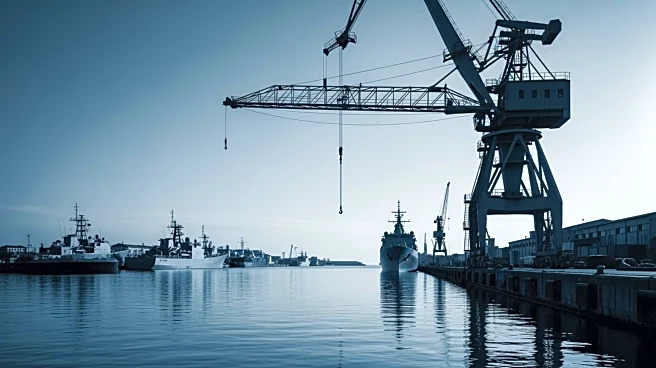
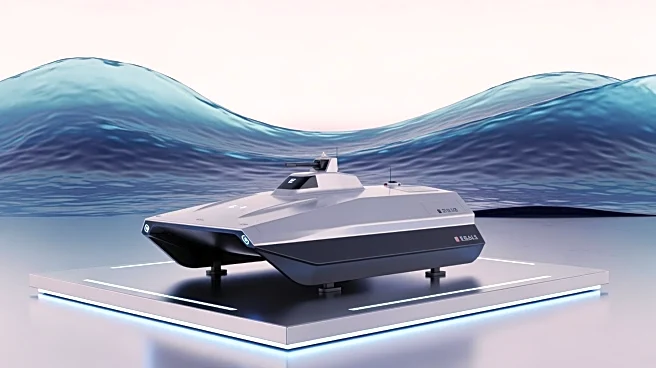
HII has reached a significant milestone in the development of its ROMULUS Unmanned Surface Vessel (USV) family, achieving 30% completion of the prototype. This progress was confirmed during a review at the Breaux Brothers Enterprises shipyard in Louisiana.
The ROMULUS USV is designed for high-endurance, open-ocean autonomy and is intended to meet the operational needs of the U.S. Navy, U.S. Marine Corps, and allied forces. The vessel is scheduled for sea trials in the fourth quarter of 2026. The ROMULUS fleet is engineered to support various mission profiles, including Intelligence, Surveillance, and Reconnaissance (ISR), Counter-UAS, mine countermeasures, and strike operations. The vessel also serves as a mothership for launching and recovering Unmanned Underwater Vehicles (UUVs) and Unmanned Aerial Vehicles (UAVs).
Why It's Important?
The development of the ROMULUS USV represents a significant advancement in unmanned maritime technology, offering enhanced capabilities for military operations. By integrating the Odyssey Autonomous Control System (ACS), the ROMULUS USV provides a scalable and autonomous solution for distributed maritime operations. This development is crucial for the U.S. military as it seeks to enhance its operational capabilities in various maritime environments. The ROMULUS USV's ability to support multiple mission profiles makes it a versatile asset for intelligence and combat operations, potentially reducing the need for manned missions and increasing operational safety.
What's Next?
As the ROMULUS USV progresses towards its scheduled sea trials in late 2026, further integration and testing of its autonomous systems will be critical. The collaboration between HII and its partners, including Shield AI and Applied Intuition, will continue to refine the vessel's capabilities. The successful deployment of the ROMULUS USV could lead to broader adoption of unmanned surface vessels in military operations, influencing future naval strategies and procurement decisions. Stakeholders will be closely monitoring the outcomes of the sea trials to assess the vessel's performance and potential for operational deployment.