





What's Happening?
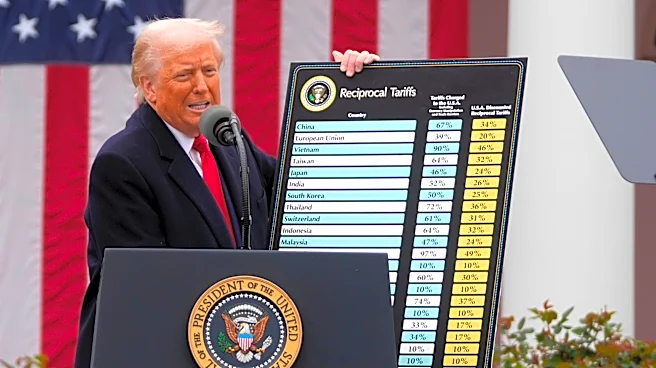
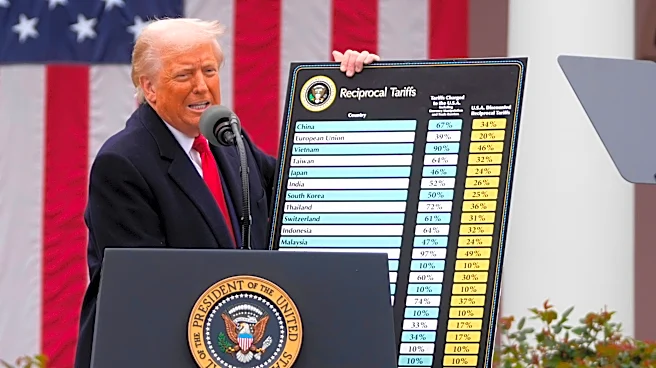
The Trump administration is preparing to impose new tariffs on 60 trading partners as the current 10% global levy is set to expire. These tariffs are aimed at countries allegedly failing to act against forced labor. The new duties, expected to range between
10% and 12.5%, are part of President Trump's strategy to leverage tariffs in trade negotiations. Recent actions include a 25% tariff on Brazilian goods and a 50% levy on Canadian products, with further discussions planned with Canadian officials.
Why It's Important?
The imposition of new tariffs by the Trump administration could have significant implications for international trade relations and the U.S. economy. These measures may lead to increased tensions with trading partners and potential retaliatory actions. The focus on forced labor highlights ongoing human rights concerns in global supply chains. The tariffs could impact various industries, affecting prices and supply chains, and may influence diplomatic relations with affected countries.
What's Next?
As the new tariffs are implemented, affected countries may respond with their own trade measures, potentially leading to a cycle of escalation. The U.S. will need to navigate these tensions while balancing domestic economic interests. Ongoing discussions with Canada and other trading partners will be crucial in managing the fallout and seeking resolutions. The administration's approach to trade policy will continue to be a focal point in international economic discussions.