








What's Happening?
A bipartisan effort in the U.S. Congress is underway to ban Chinese electric vehicles (EVs) from the American market. The proposed legislation, spearheaded by Republican Senator Bernie Moreno of Ohio and Democratic Senator Elissa Slotkin of Michigan,
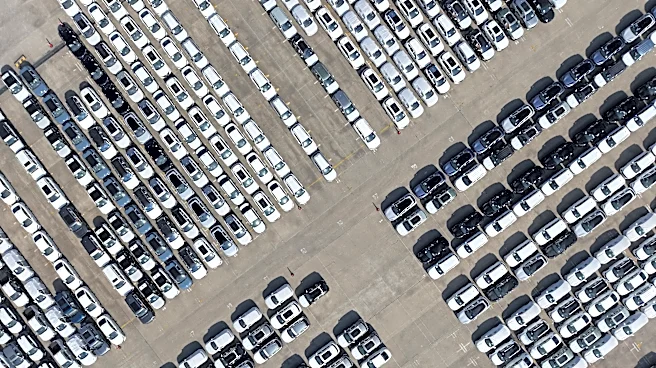
aims to codify a regulation that effectively prohibits Chinese automakers from selling passenger vehicles in the United States. This move is part of a broader strategy to prevent China from entering the U.S. light-duty vehicle market. The legislation is set to be voted on by the U.S. Senate Commerce Committee on July 15. The primary justification for the ban is national security concerns, as vehicles designed in China with advanced connectivity and software could potentially collect sensitive personal information from American users. This legislative push comes despite existing 100% tariffs on Chinese EVs and is supported by major auto trade groups, including those representing the Detroit Three, Volkswagen, Hyundai, and Toyota.
Why It's Important?
The proposed ban on Chinese electric vehicles highlights the growing tension between the U.S. and China in the automotive sector, particularly in the realm of electric vehicles. U.S. automakers are reportedly struggling to compete with the low-cost, high-quality EVs produced by Chinese manufacturers. The legislation reflects a protective stance aimed at safeguarding the U.S. auto industry from foreign competition, particularly from a country perceived as a strategic rival. If passed, this ban could significantly impact the global automotive market dynamics, potentially isolating the U.S. from advancements in Chinese EV technology. It also underscores the broader geopolitical struggle over technological dominance and market access, with implications for international trade relations and economic policies.
What's Next?
If the legislation passes, it could lead to increased tensions between the U.S. and China, potentially prompting retaliatory measures from China. Chinese automakers might seek alternative markets or explore ways to circumvent the ban, such as through partnerships or joint ventures with non-Chinese companies. The U.S. auto industry may also face pressure to accelerate its own EV development to remain competitive globally. Additionally, the legislation could influence other countries' policies towards Chinese EVs, potentially leading to a more fragmented global market. Stakeholders, including policymakers, industry leaders, and consumers, will be closely monitoring the outcome of the Senate Commerce Committee vote and any subsequent legislative actions.