
What's Happening?
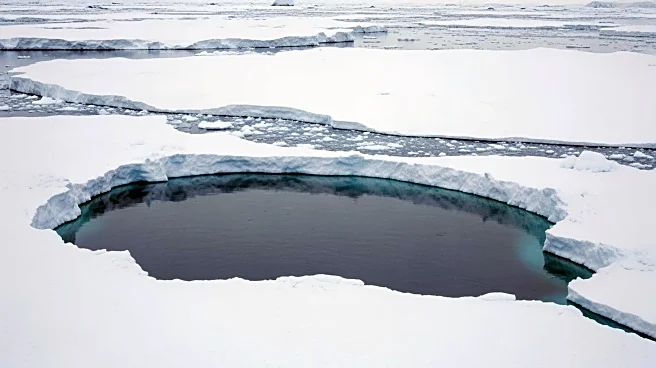
A significant polynya, a large hole in the sea ice, was observed in the Weddell Sea during the Antarctic winters of 2016 and 2017. This phenomenon, roughly the size of Switzerland, appeared in an area
where the ice should have been thickest. The polynya was driven by a process called Ekman-driven salt transport, where wind patterns and ocean currents caused saltier water to disrupt the ocean's vertical layering. This led to the upwelling of warmer water, melting the sea ice from below and maintaining the open water patch. The event was a rare alignment of oceanic and atmospheric forces, revealing the complex interactions that can influence sea ice dynamics.
Why It's Important?
The formation of the polynya highlights the sensitivity of the Antarctic region to changes in wind patterns and ocean currents, which are influenced by climate change. Such events can have significant implications for global ocean circulation and climate systems, as they affect the exchange of heat and carbon dioxide between the ocean and the atmosphere. The study of this polynya provides insights into the potential for similar events to occur more frequently as climate change progresses, which could alter weather patterns, sea-level rise, and carbon cycling on a global scale.
What's Next?
Researchers will continue to monitor the Antarctic region to better understand the conditions that lead to polynya formation. This includes studying the impacts of changing wind patterns and ocean salinity on sea ice dynamics. The findings could inform climate models and help predict future changes in the Earth's climate system. Additionally, there may be increased international focus on the Antarctic as a critical area for climate research, with potential implications for global climate policy and conservation efforts.