





What's Happening?
Horsham, UK, marked Armistice Day with the planting of a new Peace Tree in The Causeway. The ceremony, held on Wednesday, November 11, at 11 am, included prayers led by the Rev'd Cannon Lisa Barnett, a traditional one-minute silence, and the sounding
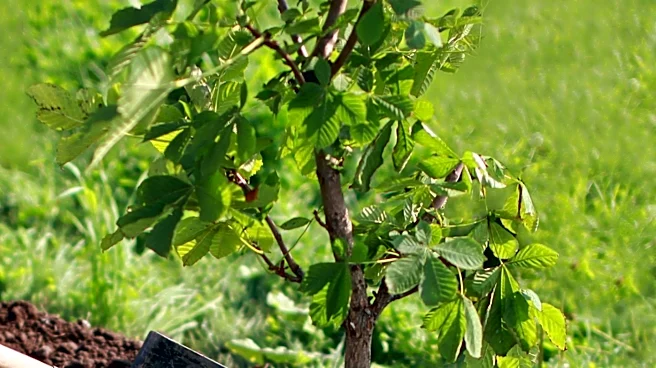
of The Last Post by Cllr Martin Boffey. Horsham District Council Chair Cllr Joanne Knowles led official wreath-laying before planting the Ginko tree. This particular species was chosen because Ginko trees famously survived the atomic bomb dropped on Hiroshima in 1945, making them a powerful symbol of peace and regeneration. Additionally, Ginko trees are recognized for their climate resilience and vibrant autumn foliage. The new tree replaces a previous Peace Tree, planted in 1986 to commemorate the UN's International Year of Peace, which had to be removed earlier this year due to significant decay. The council's decision to plant the new tree on Armistice Day serves as a tribute to all who have served and sacrificed for peace. The event saw attendance from local schools and organizations, with the War Memorial opened for public wreath laying. A separate short service also took place at Hills Cemetery in memory of Polish soldier Captain Czeslaw Witold Chojnicki.
Why It's Important?
The planting of the Peace Tree in Horsham carries significant symbolic weight, particularly in its connection to Hiroshima. The Ginko tree's ability to survive the atomic devastation of Hiroshima makes it a potent emblem of resilience, hope, and the enduring pursuit of peace in the face of extreme adversity. This act of remembrance on Armistice Day reinforces the global desire for peace and serves as a tangible link between past conflicts and future aspirations. For the community of Horsham, it provides a renewed focal point for reflection on the sacrifices made by service members and a continuous reminder of the importance of peace. The event also highlights local government's role in fostering community spirit and historical remembrance, engaging schools and organizations in a collective act of tribute. The choice of a climate-resilient tree also subtly connects themes of environmental sustainability with peace, suggesting a holistic approach to future well-being.
What's Next?
The newly planted Peace Tree will serve as a lasting memorial and a symbol for future generations in Horsham. It is expected to become a focal point for future Armistice Day commemorations and other peace-related events in the community. Local schools and organizations, having participated in the planting ceremony, may continue to engage with the tree as an educational tool, teaching students about the history of conflict, the importance of peace, and the resilience of nature. The tree's growth will physically embody the community's ongoing commitment to these values. The council will likely maintain the tree as a significant civic landmark, ensuring its longevity as a symbol of remembrance and hope. The replacement of the previous decayed tree also underscores the long-term commitment to maintaining such symbols within the public space.
Beyond the Headlines
The selection of the Ginko tree, specifically for its connection to Hiroshima, transcends a simple act of remembrance; it invokes a powerful historical narrative about survival and renewal after catastrophic events. This choice subtly encourages a deeper reflection on the consequences of war and the enduring human spirit to rebuild and seek harmony. It also highlights the universal language of symbols, where a single tree can represent profound historical lessons and aspirations for the future across different cultures and nations. The event in Horsham, while local, taps into a global consciousness regarding peace and the lessons learned from past conflicts, particularly those involving weapons of mass destruction. It serves as a quiet, yet potent, reminder of the fragility of peace and the continuous effort required to maintain it, drawing a direct line from the devastation of Hiroshima to a local act of hope and remembrance.