






What's Happening?
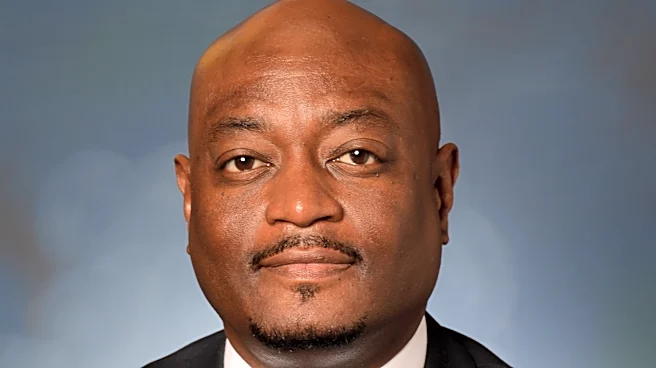
Matthew Brown, the finance director for the Eugene 4J School District, has filed a tort claim against the district, alleging retaliation and other claims. Brown asserts that he was unfairly blamed for a $16.4 million budget error and that district leaders
did not fully disclose the underlying causes of the shortfall. Following his refusal to resign, Brown claims he was placed on administrative leave. His attorney, Nathan Rietmann, has indicated that these claims, which include protected speech under the First Amendment and whistleblowing, may be pursued in court. The Eugene Education Association President, Jamie Myers, has expressed that the unexpected $16.4 million shortfall has significantly eroded trust among members regarding the district's budgeting process and finances. The next regular 4J board meeting is scheduled for September 2.
Why It's Important?
This tort claim highlights significant issues within the financial management and internal accountability of the Eugene 4J School District, a public institution responsible for educating a substantial portion of the local youth. A $16.4 million budget error can have profound implications, potentially leading to cuts in educational programs, staff reductions, or increased financial burdens on taxpayers. The allegation of retaliation against a finance director for raising concerns about financial discrepancies could deter other employees from reporting similar issues, thereby undermining transparency and good governance. The erosion of trust among staff, as noted by the Eugene Education Association, could also negatively impact morale and the district's ability to attract and retain qualified personnel. Furthermore, if the district is found liable, it could face substantial legal costs and damages, diverting funds from educational services.
What's Next?
The tort claim notice signals the potential for a lawsuit against the Eugene 4J School District, with Matthew Brown's attorney, Nathan Rietmann, prepared to pursue the claims in court. The district will likely need to respond to these allegations, which could involve an internal investigation, legal defense preparations, or attempts at settlement. The upcoming regular 4J board meeting on September 2 may provide an initial platform for public discussion or updates regarding the situation, though specific details of the claim might be handled in executive session due to legal sensitivities. The outcome of this claim could lead to significant changes in the district's financial oversight practices, accountability measures for leadership, and potentially a re-evaluation of its budget processes to prevent future errors of this magnitude. Stakeholders, including parents, teachers, and community members, will be closely watching for transparency and resolution.
Beyond the Headlines
The dispute within the Eugene 4J School District extends beyond a mere financial error; it touches upon critical aspects of public sector ethics, whistleblower protection, and the integrity of financial reporting in educational institutions. The claim of retaliation for 'protected speech' and 'whistleblowing' suggests a potential chilling effect on employees who might otherwise come forward with concerns about mismanagement. This case could set a precedent for how public entities handle internal financial discrepancies and how they treat employees who report them. It also raises questions about the oversight mechanisms in place to prevent such large budget errors and ensure accountability at the highest levels of district administration. The long-term implications could include a re-evaluation of state and local policies regarding financial transparency and whistleblower protections in school districts across the U.S., aiming to foster environments where financial integrity is prioritized and protected.