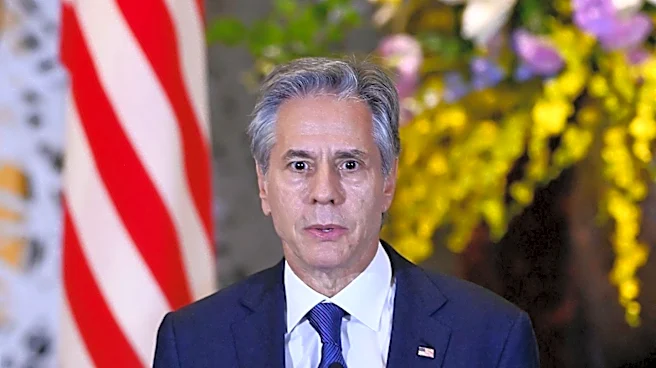










What's Happening?
US Senator Lindsey Graham, a prominent Republican and ally of President Trump, has died at the age of 71 due to a ruptured aorta caused by chronic heart disease. Preliminary findings from the DC medical examiner's office indicate that Graham suffered
from aortic dissection due to arteriosclerotic cardiovascular disease. His death comes shortly after returning from a trip to Ukraine, where he met with President Volodymyr Zelensky. President Trump has ordered flags to be lowered in Graham's honor, and South Carolina Governor Henry McMaster is expected to appoint a temporary replacement for Graham's Senate seat.
Why It's Important?
Graham's death represents a significant loss for the Republican Party and President Trump, as Graham was a reliable vote in the Senate. His passing could affect the balance of power in the Senate, although South Carolina is expected to remain a Republican stronghold. Graham's support for Ukraine and Israel, as well as his opposition to Iran, made him a key figure in US foreign policy discussions. His death may also influence legislative efforts, such as the proposed bill to increase US sanctions on Russia, which Graham supported.
What's Next?
Governor McMaster will appoint a temporary replacement for Graham's Senate seat, and an expedited primary election will be held to select a nominee for the upcoming midterm elections. This process will determine the long-term occupant of the seat. Meanwhile, Graham's death may accelerate legislative efforts he championed, such as increased sanctions on Russia. Internationally, leaders like President Zelensky and Prime Minister Netanyahu have expressed their condolences, highlighting Graham's influence on US foreign policy.