

What's Happening?
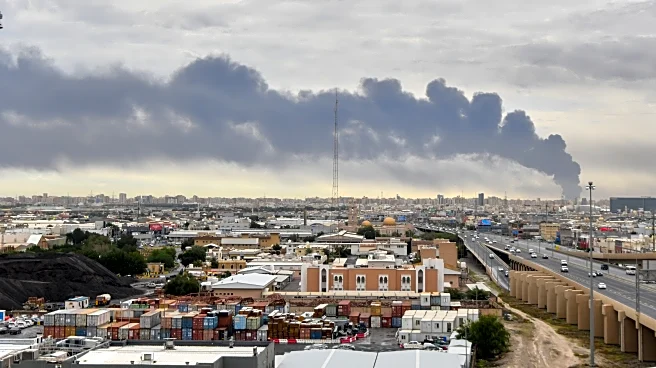
JPMorgan Chase CEO Jamie Dimon has expressed cautious optimism about the potential for long-term stability in the Middle East, despite the ongoing conflict involving the U.S. and Israel against Iran. Speaking at the Hill & Valley Forum in Washington,
Dimon highlighted a shift in regional mentality that could pave the way for resolving long-standing tensions. He noted the desire among countries like Saudi Arabia, the UAE, Qatar, the U.S., and Israel for permanent peace in the region. Dimon also pointed out the role of Israel in facilitating the establishment of a long-term Palestinian state. However, he acknowledged the short-term risks and uncertainties associated with the conflict. Additionally, Dimon criticized the U.S. for its lack of industrial capacity to rapidly scale up arms production during wartime, citing frustrations with Pentagon procurement rules and budget constraints.
Why It's Important?
Dimon's remarks underscore the complex geopolitical dynamics in the Middle East and the potential for significant shifts in regional alliances and peace efforts. His optimism reflects a broader hope for diplomatic resolutions that could stabilize the region, benefiting global markets and reducing oil price volatility. The conflict has already impacted global inflation and market stability, highlighting the interconnectedness of regional conflicts and global economic health. Dimon's critique of U.S. wartime industrial capacity also raises concerns about national defense readiness and the need for policy reforms to enhance military supply chains. The potential establishment of a Palestinian state could have profound implications for regional peace and U.S. foreign policy.
What's Next?
The ongoing conflict and diplomatic efforts will likely continue to shape U.S. and Middle Eastern relations. Key stakeholders, including political leaders and international organizations, may intensify efforts to broker peace and address the humanitarian and economic impacts of the conflict. The U.S. may also need to reassess its defense procurement strategies to ensure readiness for future conflicts. The potential for a Palestinian state will remain a critical issue, with international attention focused on Israel's role in facilitating peace. The outcome of these developments could influence U.S. foreign policy and regional stability for years to come.