







What's Happening?
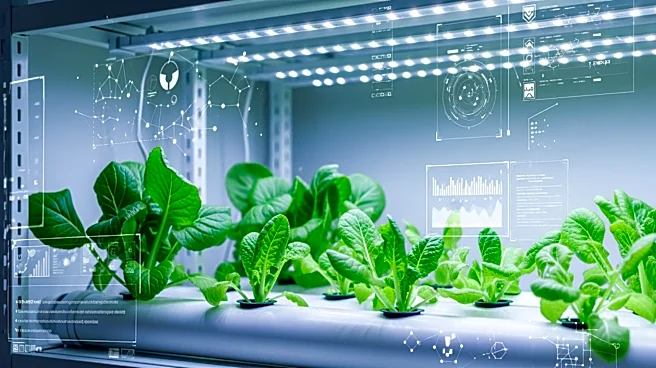
Hydroponic farming in Brickell, Miami, is leveraging scalable agriculture software to optimize urban food production. This method involves growing plants without soil, using nutrient-rich water solutions, which is particularly beneficial in high-density
urban areas like Brickell. The software centralizes crop scheduling, nutrient management, climate control, and sensor integration, reducing manual errors and improving traceability. This approach allows for year-round production, higher yields per square meter, and efficient use of urban space. The integration of advanced sensor systems and modular infrastructure is crucial for urban resilience, especially as cities face food supply shocks and climate events.
Why It's Important?
The adoption of hydroponic farming and scalable software in urban areas like Brickell is significant for several reasons. It addresses the challenges of limited land and resources, enabling sustainable food production in densely populated areas. This method reduces water usage by over 90% compared to traditional farming, making it environmentally friendly. The software's ability to automate processes and integrate real-time data enhances operational efficiency and supply chain resilience. As urban populations grow, such innovations are vital for ensuring food security and reducing the environmental impact of agriculture.
What's Next?
As hydroponic farming continues to expand in urban areas, further integration of technology and software is expected. This includes the use of AI and satellite monitoring for real-time analytics and predictive insights. The scalability of these systems allows for phased expansion, adapting to increasing demand and urbanization. Stakeholders, including urban planners and investors, are likely to focus on enhancing infrastructure to support these systems, ensuring they can withstand climate challenges and maintain consistent production.
Beyond the Headlines
The shift towards hydroponic farming in urban areas like Brickell represents a broader trend towards sustainable agriculture. It highlights the importance of integrating technology with traditional farming practices to meet modern challenges. This approach not only supports food security but also contributes to urban resilience against climate change. The ethical implications of reducing resource consumption and minimizing environmental impact are significant, as cities strive to balance growth with sustainability.