
What's Happening?
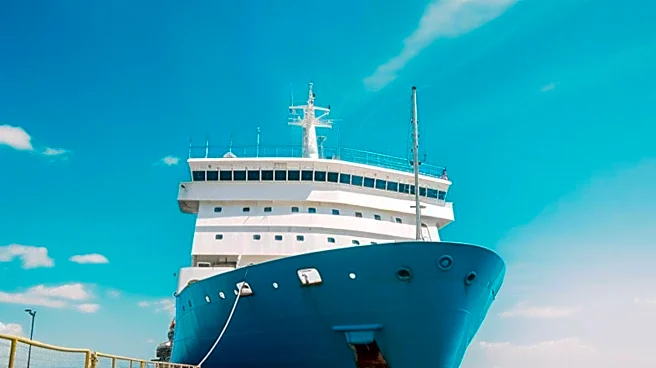
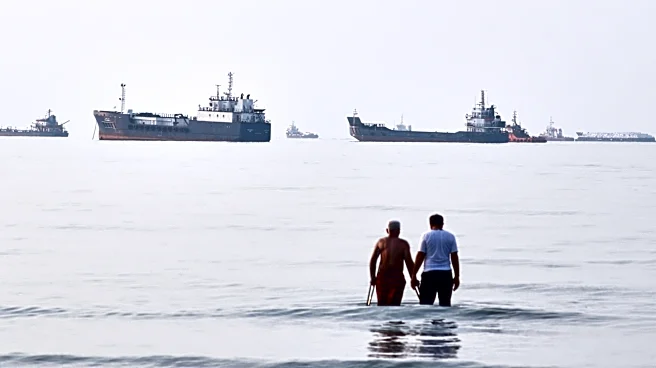
Scientists have raised concerns about a potential ecological disaster stemming from stalled ships near the Strait of Hormuz. Over 1,500 ships are currently idle in the Persian Gulf, with hundreds more
in the Gulf of Oman, due to ongoing conflict in the region. The Strait of Hormuz, a critical passageway for around 20% of the world's oil supply, has been intermittently blocked by Iran, leading to significant disruptions in tanker traffic. This situation has created conditions conducive to a superspreader event of invasive species, as marine organisms attach to the stationary vessels and are transported to other ecosystems worldwide. The prolonged stationary periods allow for substantial biofouling, where microorganisms, algae, plants, and invertebrates accumulate on the ships. Once these invasive species establish themselves in foreign ecosystems, they are nearly impossible to eradicate, posing threats to commercial operations like aquaculture and fisheries.
Why It's Important?
The potential spread of invasive species due to stalled ships near the Strait of Hormuz could have significant global ecological and economic impacts. Invasive species can cause millions of dollars in damage and disrupt commercial activities such as aquaculture and fisheries. The organisms in the region are particularly hardy, having adapted to high salinity and warm temperatures, increasing their likelihood of survival in other environments. This situation represents a severe international biosecurity threat, as the affected vessels have a vast global reach. The ecological consequences could be long-lasting, with stressed ecosystems being highly vulnerable to bioinvasion. Prevention and early detection are crucial, as eradication of invasive marine species is often costly and challenging.
What's Next?
To mitigate the risk of invasive species spread, ecologists recommend that ships clean their hulls before departing the region. In-water cleaning services, where divers scrape off biofoul, are suggested, with the addition of vacuum-like devices to prevent live organisms from reattaching to other ships. Future regulations may require ships to have clean hulls before entering certain waters, as seen in New Zealand. The International Maritime Organization is advocating for stronger biofouling regulations to prevent such ecological threats. Continued monitoring and proactive measures are essential to address the biosecurity risks posed by the stalled ships.
Beyond the Headlines
The situation near the Strait of Hormuz highlights the complex interplay between geopolitical conflicts and environmental issues. The ecological threat posed by invasive species is exacerbated by the ongoing conflict, illustrating how political actions can have unintended environmental consequences. This event underscores the importance of international cooperation in addressing biosecurity threats and the need for comprehensive regulations to prevent the spread of invasive species. The long-term ecological impacts could alter marine biodiversity and disrupt local economies reliant on healthy ecosystems.