








What's Happening?
Ashok Kumar, a cancer researcher at the University of Houston, has identified key molecular mechanisms driving the growth of rhabdomyosarcoma (RMS), a rare and aggressive pediatric soft tissue cancer. His research, published in Nature journals, highlights
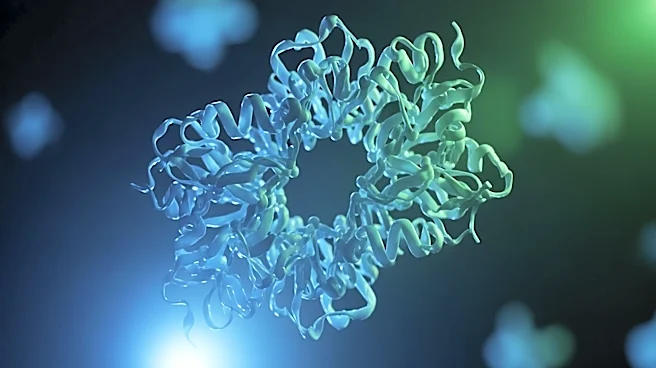
the role of the protein Transforming Growth Factor β-Activated Kinase 1 (TAK1) and the IRE1α-XBP1 signaling axis in tumor progression. These findings suggest that inhibiting these pathways could slow tumor growth and promote the differentiation of cancer cells into normal muscle cells. Rhabdomyosarcoma accounts for about 50% of pediatric soft tissue sarcomas and 8% of all childhood cancers, with a survival rate of only 20% to 30% when metastasis occurs.
Why It's Important?
The discovery of TAK1 and the IRE1α-XBP1 axis as therapeutic targets offers new hope for treating rhabdomyosarcoma, which has limited treatment options and poor prognosis. By targeting these pathways, new therapies could potentially improve survival rates and reduce the aggressiveness of the cancer. This research is significant as it bridges basic science with clinical applications, paving the way for personalized medicine strategies that could transform the treatment landscape for this devastating disease. The work is supported by a $3.2 million grant from the National Institutes of Health, underscoring its potential impact on pediatric oncology.
What's Next?
Future steps include preclinical studies and clinical trials to validate the efficacy and safety of targeting TAK1 and the IRE1α-XBP1 pathway in rhabdomyosarcoma. These efforts aim to develop selective inhibitors that can modulate these targets without causing adverse effects. Expanding research to include other molecular players in RMS pathogenesis could identify additional therapeutic targets, fostering a comprehensive approach to treatment. The ultimate goal is to develop clinically viable therapies that improve outcomes for children with RMS.