





What's Happening?
Licking County Commissioners are facing increasing public pressure regarding their contract for Flock license plate surveillance cameras, despite stating they have no immediate plans for a community town hall. Residents voiced significant concerns at a recent
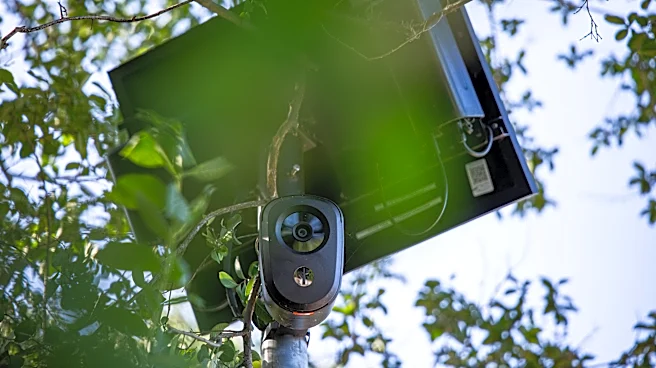
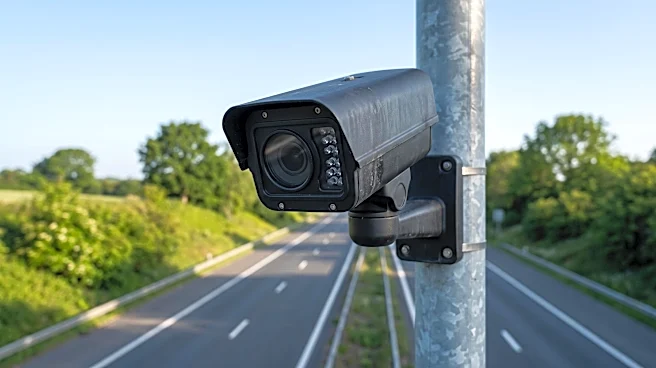
meeting on November 12, highlighting privacy issues and potential constitutional problems associated with the technology. Newark resident Daniel McKee emphasized the inherent limits on government surveillance for a free people, noting that many municipalities and police departments across the U.S. are recognizing the constitutional implications of such systems. The Flock Safety cameras, which are automated license plate readers and vehicle surveillance systems, have been in use since 2017, with over 120,000 cameras linked nationwide. In Licking County, the Sheriff’s Office manages approximately 60 cameras, with additional cameras operated by local police departments. Concerns have escalated due to instances of misuse by law enforcement officers in central Ohio, including terminations and resignations related to investigations into the system's use.
Why It's Important?
The debate over Flock surveillance cameras in Licking County reflects a broader national discussion about privacy rights versus public safety in the digital age. The technology's ability to track license plates and feed data into a centralized platform raises significant civil liberties concerns, particularly regarding potential for misuse and the scope of government surveillance. The fact that officers have been terminated or resigned due to misuse of Flock records underscores the risks associated with powerful surveillance tools without adequate oversight. This issue is important for U.S. society as it directly impacts the balance between individual privacy and law enforcement capabilities, potentially setting precedents for how technology is integrated into policing across the country. The lack of a planned community town hall also highlights a potential disconnect between local government and citizen concerns, which could erode public trust.
What's Next?
Licking County Commissioners have indicated they will continue to research the Flock contract and reevaluate it when it comes up for renewal. Commissioner Duane Flowers stated he would look at the situation again to determine if changes to the contract are needed. However, the commissioners currently have no plans for a community town hall, despite public requests for one, particularly during evening hours to allow broader participation. Commissioner Tim Bubb suggested that the issue is a statewide and national concern, implying that legislative action at higher levels might be necessary to establish guardrails for such technology. This suggests that while local review will occur, a comprehensive resolution might require broader policy changes regarding surveillance technology across Ohio and potentially the nation.
Beyond the Headlines
The controversy surrounding Flock cameras extends beyond local governance, touching upon fundamental legal and ethical questions about artificial intelligence (AI) in public safety. Despite claims by law enforcement that AI is not used in their specific camera systems, Flock itself advertises 'AI-powered video' and 'AI-powered search and alerts.' This discrepancy highlights a critical need for transparency and accurate information regarding the capabilities and limitations of surveillance technologies. The debate also underscores the challenge of regulating rapidly evolving technology, as current laws may not adequately address the implications of widespread automated surveillance. The long-term implications include the potential for a 'surveillance society' if robust legal and ethical frameworks are not established, impacting civil liberties and the nature of privacy in public spaces.