


What's Happening?
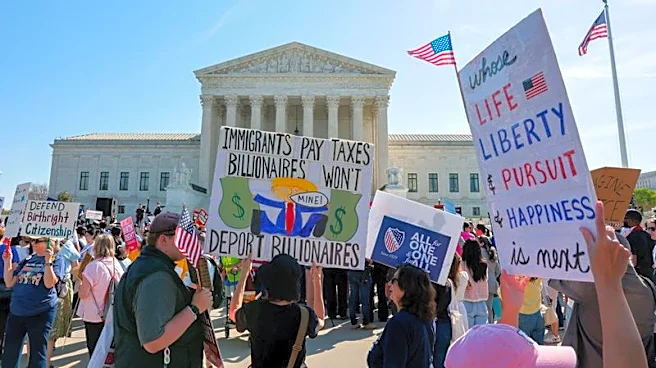
The Supreme Court is set to hear arguments regarding President Trump's executive order that seeks to end birthright citizenship for children born in the U.S. to parents who are in the country illegally or temporarily. This order, signed at the start of
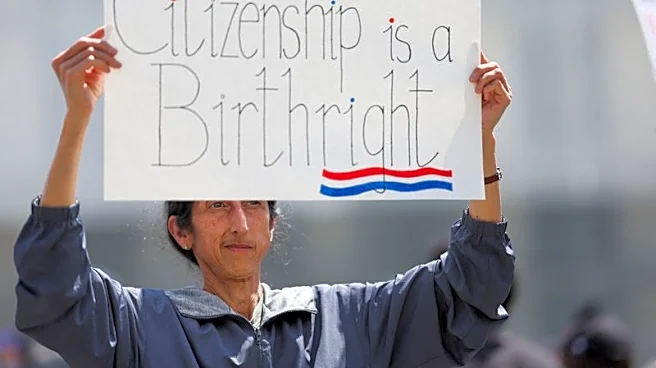
Trump's second term, challenges the long-standing interpretation of the 14th Amendment, which grants citizenship to nearly everyone born on U.S. soil. The case has reached the Supreme Court following a series of lower court rulings that have put the order on hold, citing potential violations of the Constitution and federal law. The concept of birthright citizenship, rooted in the legal principle of jus soli, has been a part of U.S. law for over a century, ensuring citizenship for former slaves post-Civil War. The case has sparked significant debate, as birthright citizenship is relatively rare globally, with most countries adhering to jus sanguinis, where citizenship is based on parental nationality.
Why It's Important?
The outcome of this Supreme Court case could have profound implications for U.S. immigration policy and the interpretation of the 14th Amendment. If the court upholds Trump's order, it could lead to significant changes in how citizenship is granted, potentially affecting millions of individuals born in the U.S. to non-citizen parents. This decision could also influence international perceptions of U.S. immigration policies, as birthright citizenship is a unique aspect of American law compared to many other countries. The case highlights ongoing debates about immigration and citizenship in the U.S., with potential impacts on social and political dynamics, particularly concerning immigrant communities and their rights.