

What's Happening?
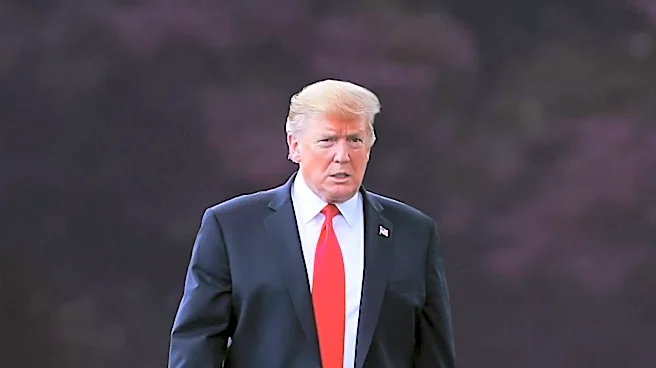
A new Beacon Poll from the Nashville-based Beacon Center of Tennessee reveals that President Trump's approval rating is 'underwater' in the deeply Republican state. The poll found that 48% of Tennessee voters approve of the President's job performance,
while 51% disapprove. This marks the first time his approval has fallen below 50% in Beacon's Tennessee polling since the organization began conducting surveys in 2023. This development is considered substantial given President Trump's 30-point victory in Tennessee two years prior. Despite this, the poll also indicates strong leads for Republican candidates in other state races, with Senator Marsha Blackburn leading her Democratic opponent by 21 percentage points in the gubernatorial race and Senator Bill Hagerty holding a 25-point lead in his reelection bid.
Why It's Important?
The fact that President Trump's approval rating is 'underwater' in Tennessee, a state that overwhelmingly supported him in the previous election, is a significant indicator of shifting political sentiment. This erosion of support in a traditionally strong Republican state suggests a potential weakening of his base and could have broader implications for the Republican Party's electoral strategies. While other Republican candidates in Tennessee are still showing strong leads, the President's declining popularity could create a challenging environment for down-ballot races in the future. This trend highlights the importance of understanding localized political dynamics and how national figures' approval ratings can impact state-level elections, even in seemingly secure areas. It also signals a potential need for the Republican Party to re-evaluate its messaging and appeal to a broader range of voters.
What's Next?
The Beacon Poll's findings will likely prompt political strategists and candidates in Tennessee, and potentially other Republican-leaning states, to closely examine the factors contributing to President Trump's declining approval. While the immediate impact on other Republican candidates in Tennessee appears limited, the long-term implications for the party's strength in the state could be significant. Future campaigns may need to adapt their messaging to address the concerns of voters who are expressing dissatisfaction with the President, even if they remain supportive of other Republican figures. The upcoming elections will serve as a crucial test of whether this dip in presidential approval is an isolated incident or a harbinger of broader political shifts within the state and potentially across the country.
Beyond the Headlines
The phenomenon of President Trump's approval rating falling 'underwater' in a deeply Republican state like Tennessee suggests a more nuanced and complex political landscape than often perceived. It indicates that even in areas with strong partisan leanings, voters are capable of differentiating between their support for individual candidates and their views on the President's performance. This could reflect a growing independence among voters or a response to specific policies and events that transcend traditional party loyalty. The contrast between the President's approval and the strong performance of other Republican candidates in the same state highlights the evolving nature of political identity and the challenges of maintaining a unified party message. This trend could lead to a more candidate-centric approach in future elections, where individual appeal and local issues play a more significant role than national party affiliation.