






What's Happening?
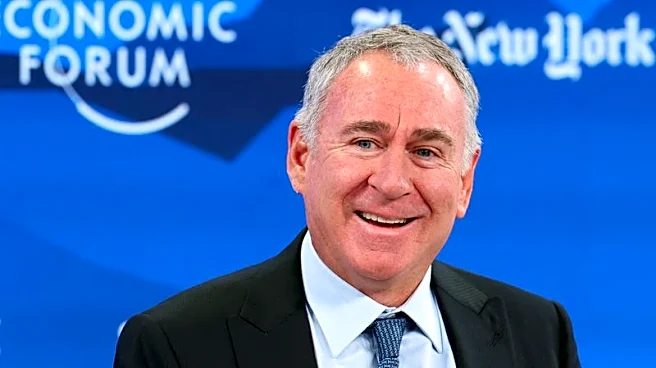
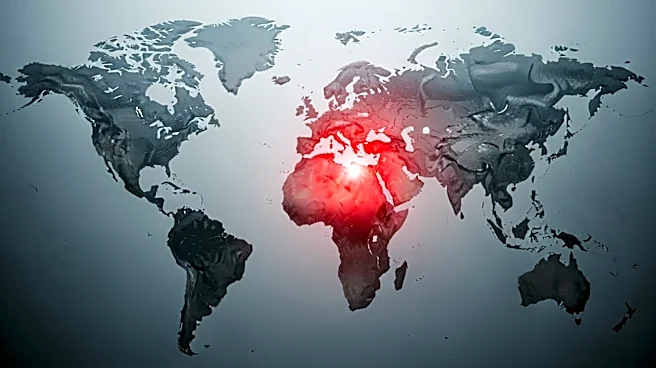
Mohamed El-Erian, a prominent economist and former deputy director of the International Monetary Fund, has issued a warning about the global economic outlook in light of the ongoing conflict in the Middle East. The war, involving Iran, the US, and Israel,
has led to the closure of the Strait of Hormuz, a critical channel for oil and liquefied natural gas. This has resulted in a surge in energy prices, contributing to a 'stagflationary wind' and financial instability. The International Monetary Fund (IMF) has revised its global growth forecast down to 3.1% for this year, with inflation expected to rise to 4.4%. If the conflict continues, growth could fall to 2%, and inflation could exceed 6% next year. El-Erian highlights the immediate impact on US households, including rising gas prices and mortgage costs, and warns of broader economic repercussions.
Why It's Important?
The conflict in the Middle East poses significant risks to the global economy, particularly through its impact on energy prices and supply chains. The closure of the Strait of Hormuz affects a substantial portion of the world's oil supply, leading to increased costs for consumers and businesses. This situation exacerbates existing economic challenges, such as inflation and inequality, and could lead to a global recession if not resolved. The IMF's warnings underscore the delicate balance policymakers must maintain between controlling inflation and supporting economic growth. The potential for prolonged economic instability could affect financial markets, consumer confidence, and international trade, with far-reaching consequences for global economic health.
What's Next?
The ongoing conflict and its economic repercussions are likely to prompt further discussions among global leaders and financial institutions. The IMF and other international bodies may need to adjust their economic forecasts and policy recommendations as the situation evolves. Countries affected by rising energy prices may implement measures to mitigate the impact on consumers, such as subsidies or tax adjustments. Additionally, diplomatic efforts to resolve the conflict and reopen the Strait of Hormuz will be crucial in stabilizing the global economy. The situation remains fluid, and stakeholders will need to monitor developments closely to adapt their strategies accordingly.