





What's Happening?
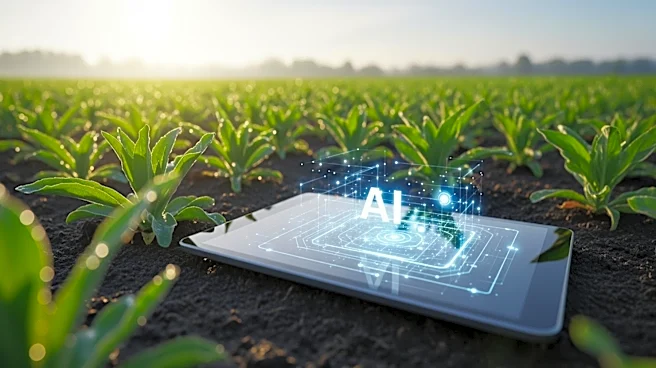
The International Trade Centre (ITC) has highlighted its AI-based Crop Advisory Platform, ITCMAARS, on the International Day of Plant Health. Launched in 2022, the platform assists farmers in identifying crop diseases and pest infestations through an AI-based feature
called 'Crop Doctor'. This tool supports up to 70 crops and has been utilized over 300,000 times, providing guidance on chemical, biological, and mechanical crop management practices in regional languages. The platform also includes features such as a Crop Calendar, Fertiliser Calculator, and 'Krishi Mitra', an AI-powered advisory tool developed with Microsoft. ITCMAARS has reached approximately 2.5 million farmers and 2,180 Farmer Producer Organizations across 11 states. According to ITC, the initiative has contributed to a 10-15% reduction in fertilizer use and a 15-20% increase in crop yields, resulting in a 25% rise in farm incomes.
Why It's Important?
The ITCMAARS platform represents a significant advancement in agricultural technology, offering substantial benefits to farmers by improving crop management and increasing yields. By reducing fertilizer use, the platform not only helps in cutting costs for farmers but also contributes to environmental sustainability. The increase in crop yields and farm incomes can lead to enhanced food security and economic stability for farming communities. This initiative aligns with global efforts to address food security challenges, particularly in the context of climate change and pest risks. The platform's ability to provide localized advice in multiple languages ensures accessibility and relevance to diverse farming communities, potentially transforming agricultural practices and outcomes on a large scale.
What's Next?
As ITC continues to expand the reach of its ITCMAARS platform, further integration of advanced technologies and partnerships could enhance its capabilities. The ongoing development of AI tools and collaboration with tech companies like Microsoft may lead to more sophisticated features and broader adoption. Stakeholders, including government agencies and agricultural organizations, may look to support and replicate such initiatives to maximize their impact. Monitoring the platform's long-term effects on agricultural productivity and environmental sustainability will be crucial in assessing its success and guiding future innovations.
Beyond the Headlines
The ITCMAARS platform's success highlights the potential of AI in transforming traditional industries like agriculture. It raises important questions about the role of technology in rural development and the need for digital literacy among farmers. The platform's impact on reducing fertilizer use also underscores the importance of sustainable agricultural practices in combating climate change. As more farmers adopt such technologies, there may be shifts in agricultural policies and market dynamics, influencing how food is produced and distributed globally.