





What's Happening?
Geely's ride-hailing subsidiary, Caocao, has unveiled a strategic plan to deploy 100,000 purpose-built robotaxis globally by 2030. This announcement was made by Chief Executive Gong Xin at the Beijing auto show. The initiative positions Caocao as a competitor
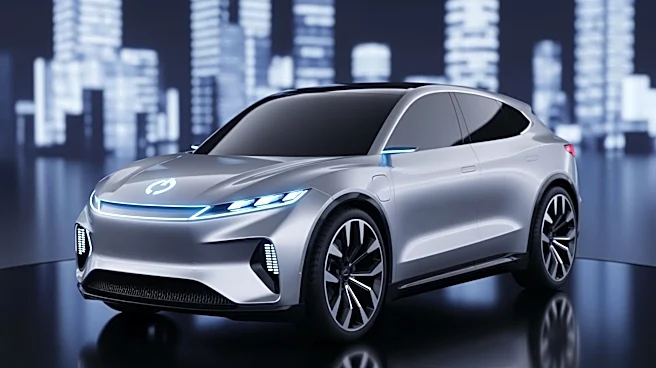
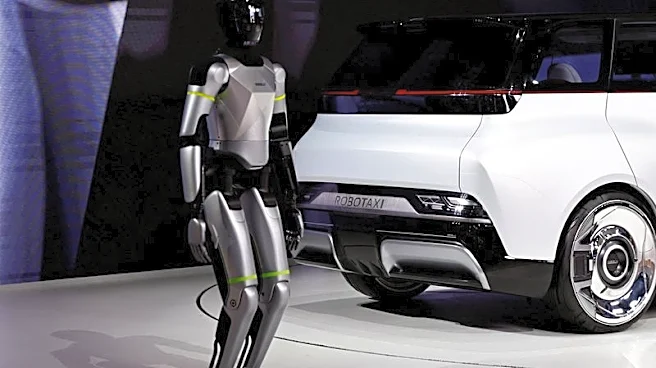
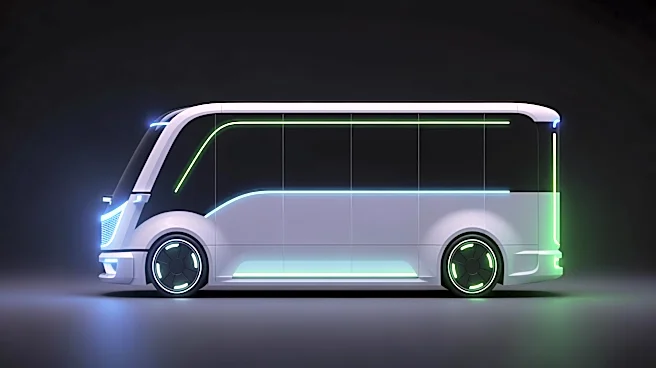
to Tesla's Cybercab and other domestic players like Pony.ai and Apollo Go. The robotaxi, named Eva Cab, is designed specifically for driverless ride-hailing, featuring a simplified cabin to reduce costs and maintenance. This approach contrasts with competitors who adapt existing models for autonomous use. Initial deployments are planned for Abu Dhabi, Hong Kong, and several Chinese cities. Caocao, which operates China's second-largest ride-hailing platform, aims to leverage its existing network for international expansion.
Why It's Important?
The development of purpose-built robotaxis by Caocao signifies a major shift in the ride-hailing industry, emphasizing cost efficiency and scalability. By designing vehicles specifically for autonomous operation, Caocao aims to overcome the cost barriers that have hindered profitability in the sector. This move could set a precedent for other companies, potentially leading to a consolidation in the market. The success of this initiative could impact the global ride-hailing landscape, influencing how companies approach autonomous vehicle deployment. It also highlights the competitive dynamics in China's rapidly evolving electric vehicle and autonomous driving markets, where only a few players are expected to survive by 2030.
What's Next?
Caocao plans to begin deploying its Eva Cab robotaxis in select international markets, including Abu Dhabi and Hong Kong, alongside several Chinese cities. The company will continue to expand its fleet, aiming for a significant presence by 2030. As the market evolves, Caocao's strategy may prompt other companies to reconsider their approaches to autonomous vehicle development. The industry could see increased investment in purpose-built designs, potentially leading to further innovation and competition. Stakeholders will be closely monitoring regulatory developments and consumer acceptance of autonomous ride-hailing services.