
What's Happening?
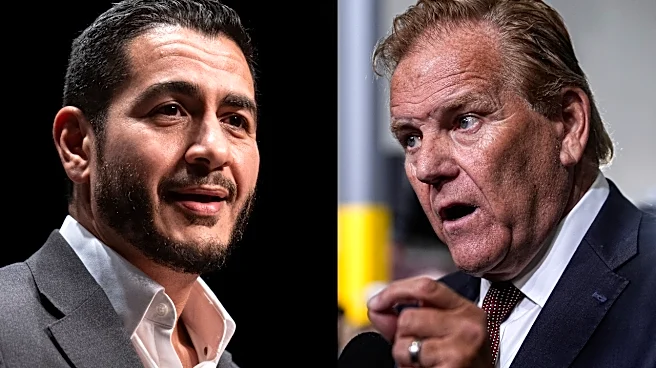
Mike Rogers, the Republican nominee in Michigan’s U.S. Senate race, is facing scrutiny over his campaign's recent refusal to participate in a FOX 2 Detroit debate, citing moderator bias. This current stance contrasts sharply with his previous enthusiastic
remarks about the same debate and moderator, Roop Raj. In May 2025, during an appearance on FOX 2's 'The Pulse,' Rogers reportedly expressed excitement about a future Senate debate, calling it 'The BIG beautiful Senate debate!!' and thanking Raj for having him on the show. However, the Rogers campaign now states that Michiganders deserve a fair debate, not one 'compromised by media bias,' and has accused Raj of past favoritism and praise for Rogers's opponent. Critics suggest that Rogers's change of heart may be due to an unwillingness to address uncomfortable questions about his record, rather than genuine concerns about moderator bias.
Why It's Important?
This apparent inconsistency in Mike Rogers's position on the FOX 2 debate is significant for several reasons. It raises questions about the sincerity of his campaign's stated reasons for withdrawal and could be used by opponents to portray him as evasive or inconsistent. For voters, this situation complicates their ability to assess candidates, as it introduces a narrative of shifting justifications for debate participation. The incident also highlights the strategic nature of political debates, where campaigns weigh the benefits of exposure against the risks of unfavorable questioning. The public perception of a candidate's willingness to engage in open dialogue is crucial, and a perceived flip-flop on debate participation can undermine trust and credibility, potentially influencing voter sentiment in a closely watched U.S. Senate race.
What's Next?
The opposing campaign is likely to continue highlighting Mike Rogers's past enthusiasm for the FOX 2 debate as a point of attack, suggesting that his current refusal is an attempt to avoid scrutiny of his record. This narrative could be amplified through campaign ads and public statements. Rogers's campaign will need to manage the perception of this inconsistency, potentially by reiterating their specific concerns about moderator bias and emphasizing their commitment to other scheduled debates. The incident may also lead to increased media attention on the specific instances of alleged bias cited by the Rogers campaign, prompting further discussion about journalistic impartiality in political coverage. Ultimately, voters will weigh these developments as they consider their choices in the Michigan U.S. Senate election.
Beyond the Headlines
This episode delves into the complex interplay between political strategy, media relations, and public perception. The 'flashback' scenario, where a candidate's past statements are used to challenge their current actions, is a common tactic in political campaigns. It underscores the importance of consistent messaging and the long memory of political opponents and the media. Furthermore, it raises questions about the evolving standards of political debate and the increasing scrutiny applied to moderators. The incident could contribute to a broader trend where campaigns are more selective about their debate appearances, potentially leading to fewer debates or more restrictive conditions for participation, thereby impacting the transparency and accessibility of political discourse for the electorate.