
What's Happening?
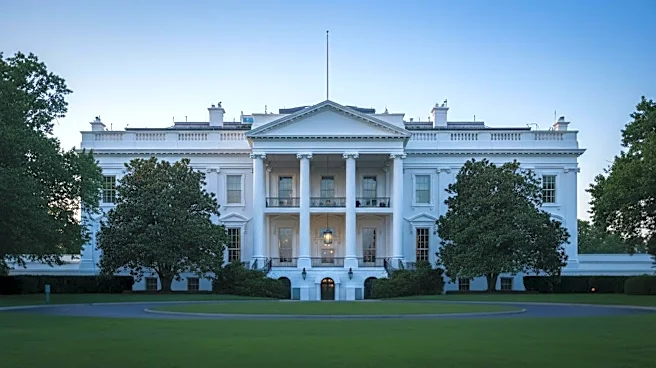
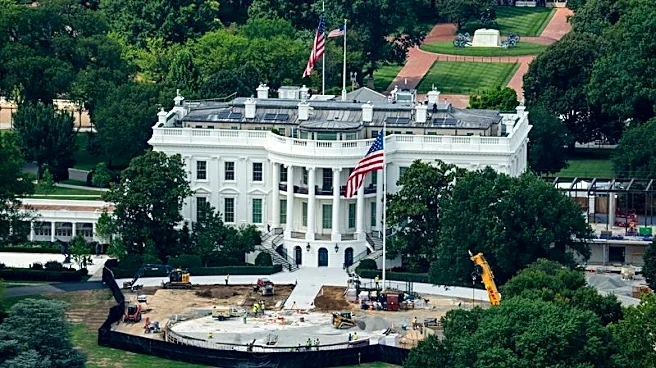
President Trump has publicly criticized Zohran Mamdani’s proposed New York luxury second-home tax, labeling it a 'dangerous political experiment' and threatening to block its implementation. Despite this public disagreement, President Trump and Mayor
Mamdani have maintained communication, cooperating on housing and immigration cases. Their continued dialogue was highlighted by a 'warm White House meeting' in February. This interaction suggests that President Trump may hold more respect for politicians who openly challenge him rather than those who avoid confrontation. The proposed tax is part of a broader discussion on global inequality, which was a key topic in the G20’s first-ever inequality report. This report warned that the growing disparity between the rich and poor poses a threat to democracy and social cohesion, while also hindering efforts to address climate change. The context of this tax also involves a California referendum on a one-off 5% levy on residents worth over $1 billion, a measure that Google co-founder Sergey Brin has actively opposed with significant financial contributions.
Why It's Important?
This development is important because it highlights the ongoing tension between wealth redistribution policies and political power in the U.S. President Trump's opposition to the New York tax, coupled with his engagement with Mayor Mamdani, illustrates a complex dynamic in U.S. politics where ideological clashes coexist with pragmatic cooperation. The broader context of global inequality, as emphasized by the G20 report and academics like Joseph Stiglitz, underscores the increasing pressure on governments to address wealth disparities. The California referendum serves as a real-world test of whether extreme wealth can influence political outcomes and defeat popular redistributive policies. If such taxes are blocked or defeated, it could embolden wealthy individuals and corporations to further influence policy, potentially exacerbating inequality. Conversely, if these taxes are implemented, they could set a precedent for similar measures across the U.S., impacting high-net-worth individuals and the real estate market. The outcome of these debates will significantly influence future tax policies, social programs, and the balance of power between economic elites and the general populace.
What's Next?
The immediate next steps will likely involve continued debate and political maneuvering surrounding the New York luxury second-home tax. Mayor Mamdani and his supporters will likely continue to advocate for its implementation, while President Trump and other opponents will seek to block it. The outcome of the California referendum on the 5% levy on billionaires will also be closely watched, as it could provide a significant indicator of public sentiment and the political feasibility of such wealth taxes. Depending on the results, other states or municipalities might consider similar legislative efforts. The ongoing dialogue between President Trump and Mayor Mamdani, despite their policy disagreements, suggests that avenues for cooperation on other issues, such as housing and immigration, may continue. Academics and international bodies, like those advocating for a UN International Panel on Inequality, will likely continue to push for global initiatives to address wealth disparities, potentially influencing future U.S. policy discussions on taxation and economic regulation. The broader implications for democratic processes and social cohesion, as highlighted by the G20 report, will remain a central theme in these discussions.
Beyond the Headlines
Beyond the immediate policy debate, this situation delves into fundamental questions about the nature of democracy and the influence of extreme wealth. The G20 report's warning that 'extreme wealth threatens democracy' suggests a deeper concern about the erosion of democratic principles when economic power concentrates disproportionately. The ability of wealthy individuals, such as Sergey Brin, to spend vast sums to oppose tax initiatives raises ethical questions about the fairness of political processes and whether the voices of ordinary citizens can compete with significant financial influence. This dynamic could lead to a long-term shift in public trust in democratic institutions if policies perceived as beneficial to the majority are consistently thwarted by the wealthy. Furthermore, the ongoing cooperation between President Trump and Mayor Mamdani, despite their ideological differences, highlights the complex and often contradictory nature of political alliances. It suggests that personal relationships and pragmatic considerations can sometimes override partisan divides, potentially leading to unexpected policy outcomes. This scenario also touches upon the cultural dimension of wealth and taxation, where the concept of 'fair share' is constantly re-evaluated in the face of growing economic disparities and the perceived responsibilities of the ultra-rich.