



What's Happening?
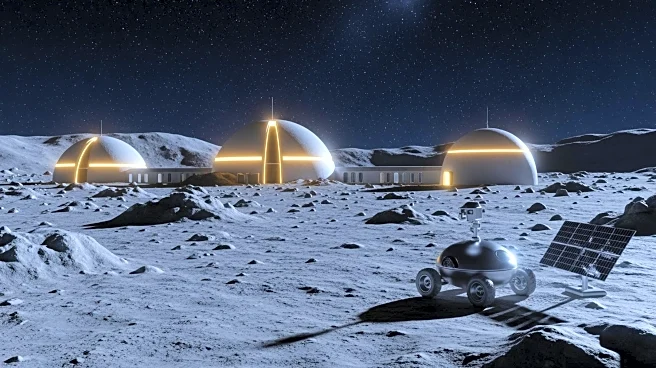
SpaceX, led by Elon Musk, has announced a strategic shift from its initial goal of Mars colonization to establishing a self-sustaining city on the Moon. This new focus involves creating a permanent lunar presence with factories and bases capable of automated
expansion. The decision is driven by the Moon's proximity to Earth, which allows for rapid iteration and resupply cycles compared to Mars. SpaceX plans to leverage the Moon's accessibility to develop a self-growing city that can autonomously expand, providing a safeguard against potential Earth-based disasters. While Mars remains a long-term aspiration, the company aims to start its lunar development within the next decade, aligning with NASA's Artemis program.
Why It's Important?
The shift in SpaceX's focus to the Moon represents a pragmatic approach to space exploration, emphasizing the potential for faster and safer development. The Moon's proximity allows for more frequent launches and shorter journey times, making it an ideal location for establishing a self-sustaining settlement. This development could complement NASA's Artemis program, which aims to return humans to the Moon and establish a sustainable presence. SpaceX's plans could also position the company competitively within the space industry, as it vies for contracts alongside rivals like Blue Origin. The successful establishment of a lunar city could pave the way for future Mars colonization, providing valuable insights and technological advancements.
What's Next?
SpaceX's focus on the Moon aligns with NASA's Artemis program, which includes the Artemis II mission, a crewed lunar flyby targeted for this year. As SpaceX progresses with its lunar plans, it will likely face technical challenges and timeline constraints associated with establishing a large-scale lunar settlement. The company will need to navigate the competitive landscape, securing contracts and partnerships to support its ambitious goals. Public discussions and collaborations with NASA and other stakeholders will be crucial in advancing SpaceX's lunar objectives and ensuring the project's success.
Beyond the Headlines
The concept of a self-growing lunar city presents significant challenges and opportunities for space exploration. Ethical and legal considerations will arise as SpaceX and other entities work to establish a permanent presence on the Moon. The development of autonomous bases and factories capable of expansion could lead to technological breakthroughs with applications beyond space exploration. Additionally, the potential to safeguard humanity from Earth-based disasters underscores the importance of establishing a sustainable presence beyond our planet. As SpaceX moves forward, it will need to address these complex dimensions while maintaining its long-term vision for Mars colonization.