





What's Happening?
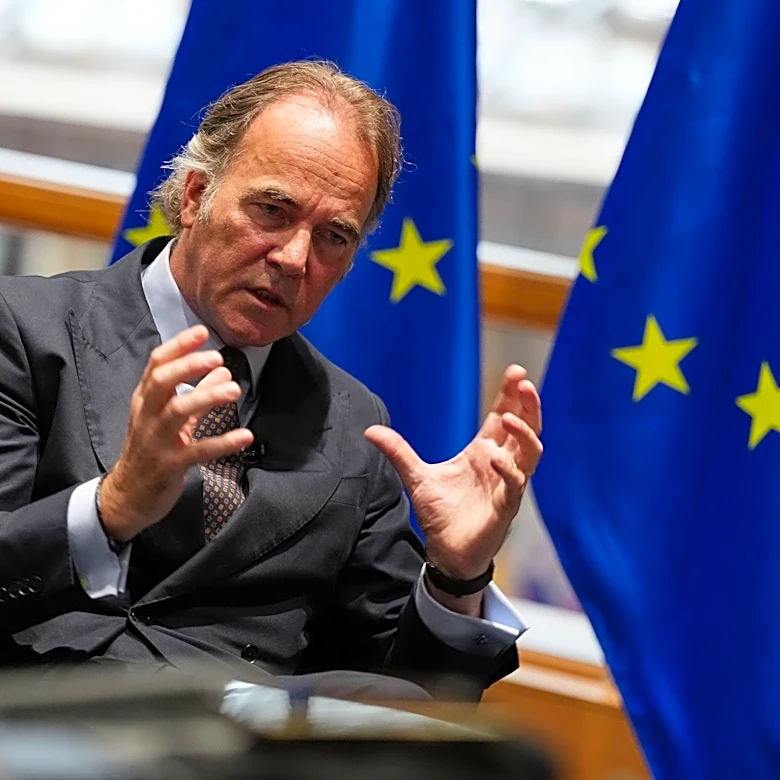
The European Union's diplomatic service has scrapped a newly announced high-level defense advisory group following significant opposition from several member states. EU foreign policy chief Kaja Kallas had introduced the initiative just last week, aiming
to gather political and military leaders to devise innovative solutions for Europe's defense needs. The group was intended to provide 'out-of-the-box solutions' to accelerate the fulfillment of defense gaps and enhance effectiveness. However, the launch event, scheduled for Monday in Brussels, was canceled on Sunday afternoon, with invitees receiving notification of the abrupt decision. Member states viewed the advisory body as an inappropriate direction, despite its purely consultative nature, lacking decision-making authority on behalf of member states. This move comes as the European External Action Service (EEAS) faces ongoing pressure, including efforts by Commission President Ursula von der Leyen to increase her influence over the bloc's foreign policy, leading to clashes with Kallas on key issues.
Why It's Important?
This decision highlights internal divisions and power struggles within the European Union regarding defense policy and the authority of its diplomatic service. The swift reversal of a high-profile initiative by the EU's foreign policy chief signals a significant political setback for Kaja Kallas, potentially weakening her position and the EEAS's autonomy. It underscores the challenges in forging a unified European defense strategy, as member states remain protective of their sovereignty and influence over security matters. The incident also reflects broader tensions between the European Commission and the EEAS over foreign policy direction, which could impact the EU's ability to project a cohesive stance on global security issues. The inability to establish even an advisory body without strong member state resistance suggests that deeper structural or political reforms may be necessary to advance European defense integration effectively.
What's Next?
The immediate consequence is a likely re-evaluation of how the EU approaches strengthening its defense capabilities and fostering strategic discussions. Kaja Kallas and the EEAS will need to address the concerns raised by member states and potentially seek alternative, more collaborative approaches to defense policy development. This could involve more direct engagement with national defense ministries or working through existing intergovernmental frameworks rather than creating new advisory bodies. The ongoing pressure on the EEAS, particularly from the European Commission, suggests that discussions about its structure and oversight will continue. Future proposals for European defense initiatives will likely face increased scrutiny from member states, requiring more extensive consultation and consensus-building from the outset to avoid similar rejections.
Beyond the Headlines
The cancellation of the defense group points to a deeper struggle within the EU over institutional power and the balance between supranational aspirations and national sovereignty. While the stated goal of strengthening European defense is widely accepted, the method of achieving it remains contentious. This episode could reinforce the perception among some member states that the EEAS is overstepping its mandate or attempting to centralize power without sufficient consultation. It also raises questions about the effectiveness of the EU's foreign policy apparatus in a rapidly evolving geopolitical landscape, particularly when facing internal resistance. The incident may lead to a more cautious approach from EU officials in proposing new initiatives, potentially slowing down efforts to enhance the bloc's strategic autonomy and defense capabilities in the long term.