








What's Happening?
A new independent analysis by Switchbox, commissioned by several environmental organizations, has found that Rhode Island's current electric rates systematically overcharge many households using heat pumps. The report, 'Heat Pump Rates in Rhode Island:
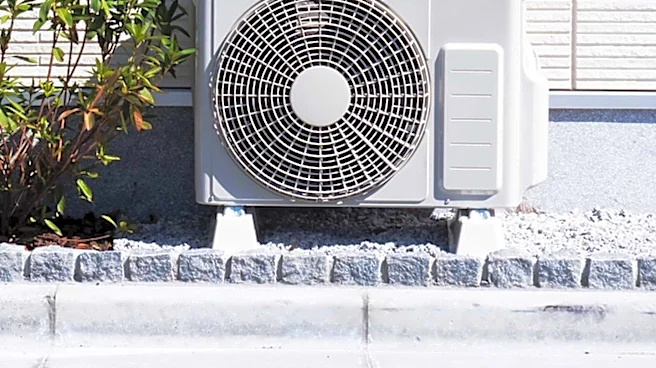
Analysis of Fair Rates for Heat Pump Customers,' indicates that households with heat pumps overpay on their electric bills by an average of about $902 per year. This overcharging effectively negates potential savings for many families, with only 21% of households heating with natural gas saving money by switching to a heat pump under current rates. The report recommends adopting a dedicated heat pump rate that accurately reflects the actual cost of serving these customers. It also suggests that Rhode Island's electric grid has ample capacity for more heat pumps, particularly in winter, and that a proposed heat pump rate could correct this imbalance with minimal impact on other customers.
Why It's Important?
This report is significant because it highlights a critical barrier to the adoption of energy-efficient heat pump technology, which is a key component of Rhode Island's climate goals, including reaching net-zero carbon emissions by 2050. If customers are being overcharged for using heat pumps, it undermines the financial incentive to switch from fossil fuel heating systems, thereby slowing down the transition to cleaner energy. The findings suggest that current electric rate structures are outdated and do not adequately account for the benefits and usage patterns of heat pump technology. This issue affects not only individual households, who are missing out on potential savings, but also the state's broader environmental objectives. Addressing this imbalance through fairer rates could accelerate heat pump adoption, reduce overall energy consumption, improve air quality, and contribute to climate change mitigation efforts, making clean heating more accessible and affordable for more Rhode Islanders.
What's Next?
The report urges the Rhode Island Public Utilities Commission (PUC) to adopt a permanent heat pump rate that better reflects the actual cost of serving heat pump customers. This proposed rate aims to ensure that 87% of households currently heating with natural gas would save money by switching to a heat pump. While policymakers are considering proposals for near-term bill relief to manage high winter electricity costs, the environmental organizations emphasize that these measures do not address the systemic overcharging of heat pump users. The report's findings build on recommendations previously filed by the Environmental Defense Fund and Sierra Club in Rhode Island Energy's general rate case. The next steps will involve the PUC's consideration of these recommendations and potential implementation of a dedicated heat pump rate, which would be a crucial step towards aligning utility operations with the state's climate and energy efficiency goals.
Beyond the Headlines
The systematic overcharging of heat pump customers in Rhode Island reveals a deeper issue within the regulatory frameworks governing utility rates. Often, these frameworks are designed around traditional energy consumption patterns and may not adapt quickly enough to new, energy-efficient technologies. This creates a disincentive for consumers to adopt innovations that are beneficial for both their wallets and the environment. The report implicitly calls for a re-evaluation of how utilities calculate and apply rates, moving towards a more dynamic and equitable system that rewards energy efficiency rather than penalizing it. Furthermore, the issue highlights the complex interplay between economic incentives, environmental policy, and consumer behavior. If states are serious about achieving climate goals, they must ensure that the economic landscape supports, rather than hinders, the adoption of clean energy technologies. This situation in Rhode Island could serve as a case study for other states facing similar challenges in their transition to a greener energy future, emphasizing the need for regulatory reform to keep pace with technological advancements and climate imperatives.