






What's Happening?
Florida has reported 60 travel-related cases of chikungunya fever, alongside two locally acquired human cases of West Nile virus in Alachua and Walton counties. This comes as the state is already experiencing a significant increase in mosquito-borne illnesses,
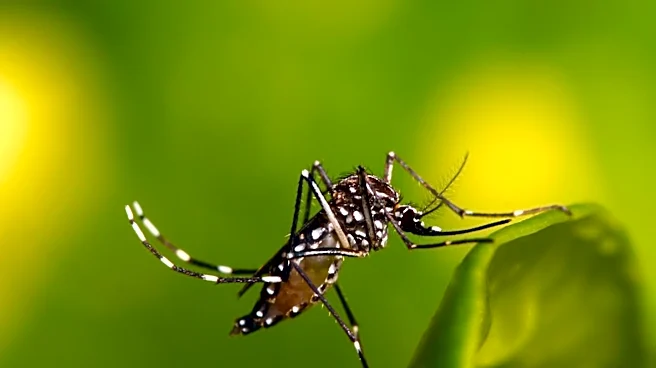
leading the nation in dengue cases with 270 reported this year. Of these, 111 are locally acquired in six Florida counties, with 95 concentrated in Hillsborough County. Mosquito control experts note that peak dengue season typically runs from July through September. The Aedes aegypti and Aedes albopictus mosquito species, identifiable by their dark bodies and white-striped legs, are responsible for transmitting dengue, Zika, yellow fever, and chikungunya. These mosquitoes are daytime biters, most active just after sunrise and before sunset. County workers across Florida are intensifying efforts to combat mosquito populations through trapping and targeted spraying, particularly in areas with confirmed cases. For instance, Palm Beach County is under a mosquito-borne illness advisory, Miami-Dade County has an alert and has added wastewater surveillance, and Broward County operates a robust surveillance and spraying program.
Why It's Important?
The surge in mosquito-borne illnesses, including chikungunya and West Nile virus, poses a significant public health challenge for Florida. The high number of travel-related chikungunya cases indicates a continuous risk of introduction and potential local transmission, especially given the presence of competent mosquito vectors. The detection of locally acquired West Nile virus cases further underscores the endemic nature of mosquito-borne diseases within the state. This situation places a strain on public health resources, requiring increased surveillance, mosquito control efforts, and public awareness campaigns. Economically, outbreaks of such diseases can impact tourism, a vital industry for Florida, as concerns about health risks may deter visitors. For residents, there's a direct health impact, with symptoms ranging from fever and pain to severe complications requiring hospitalization, as seen with dengue. The potential for a wider spread of these diseases could lead to higher healthcare costs and lost productivity. The situation highlights the ongoing battle against vector-borne diseases, exacerbated by factors like frequent global travel and potentially changing climate patterns that favor mosquito proliferation.
What's Next?
Public health officials in Florida are urging residents to take immediate preventive actions, including using EPA-registered insect repellent, covering up exposed skin, and eliminating standing water around homes to reduce mosquito breeding sites. Mosquito control agencies will continue their intensified surveillance, trapping, and spraying operations, particularly in counties with confirmed cases. Miami-Dade's use of wastewater sampling is expected to aid in proactive monitoring and anticipating additional cases, especially as post-summer travel resumes. The focus will remain on controlling mosquito populations and preventing further local transmission of these viruses. Continued public education campaigns will be crucial to ensure residents understand the risks and implement protective measures. The long-term outlook suggests that with increasing global temperatures and travel, Florida may continue to face challenges from both native and invasive mosquito species and the diseases they carry, necessitating sustained and adaptive public health strategies.
Beyond the Headlines
The increasing prevalence of mosquito-borne illnesses in Florida, including chikungunya and West Nile virus, points to broader environmental and public health challenges. The role of climate change in extending mosquito breeding seasons and expanding their geographical range is a significant underlying factor. Hotter summers and increased rainfall create ideal conditions for mosquito proliferation, making it more difficult to control their populations. The interconnectedness of global travel means that diseases acquired abroad can quickly be introduced into local populations, highlighting the need for robust international health surveillance and rapid response mechanisms. This situation also raises questions about the adequacy of current public health infrastructure and funding to address emerging and re-emerging infectious diseases. The emphasis on individual prevention, while important, also underscores the collective responsibility in managing public health threats, from community-level mosquito control to broader policy decisions on climate and global health. The ongoing battle against these viruses serves as a stark reminder of the delicate balance between human activity, environmental changes, and public health outcomes.