

What's Happening?
The U.S. Environmental Protection Agency (EPA) has announced a $610 million loan under the Water Infrastructure Finance and Innovation Act (WIFIA) to support the Grand Prairie Water Commission in Illinois. This funding will facilitate the transition of
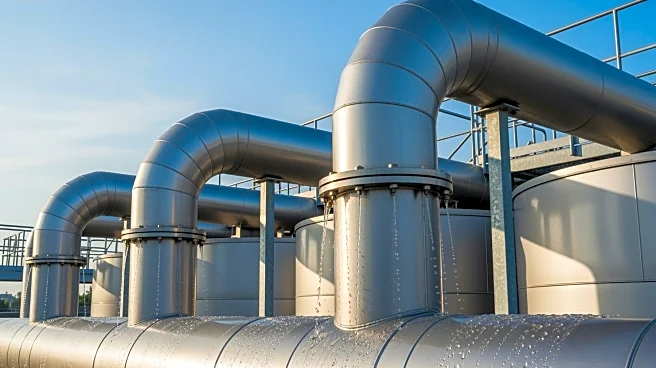
nearly 300,000 residents from a declining groundwater aquifer to Lake Michigan as their primary water source. The project involves constructing a 62-mile transmission system and upgrading infrastructure to ensure reliable water supply. The initiative aims to address long-term water supply challenges and improve water quality for the cities of Crest Hill and Joliet, and the villages of Channahon, Minooka, Shorewood, and Romeoville.
Why It's Important?
This significant investment underscores the federal government's commitment to improving water infrastructure and ensuring reliable access to clean water. By shifting to Lake Michigan, the project addresses critical supply issues associated with the declining aquifer, supporting regional growth and sustainability. The WIFIA loan provides financial flexibility, allowing for customized repayment schedules and deferred principal payments, which are expected to save the commission nearly $300 million. This project highlights the importance of federal support in advancing essential infrastructure improvements while maintaining affordability for local communities.
What's Next?
The Grand Prairie Water Commission will proceed with the construction and infrastructure upgrades, aiming to complete the project by 2030. The successful implementation of this initiative will serve as a model for other regions facing similar water supply challenges. Continued collaboration between federal, state, and local entities will be crucial in ensuring the project's success and addressing future water infrastructure needs.