



What's Happening?
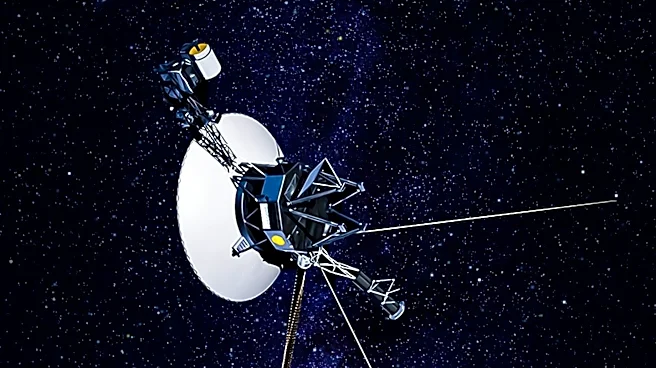
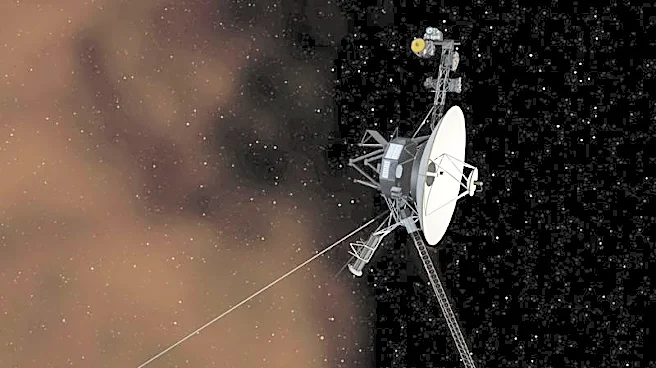
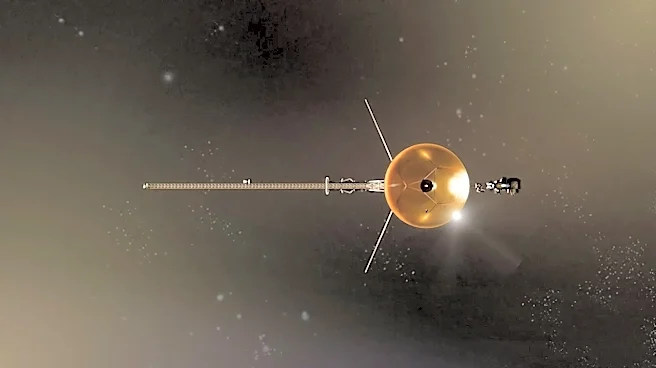
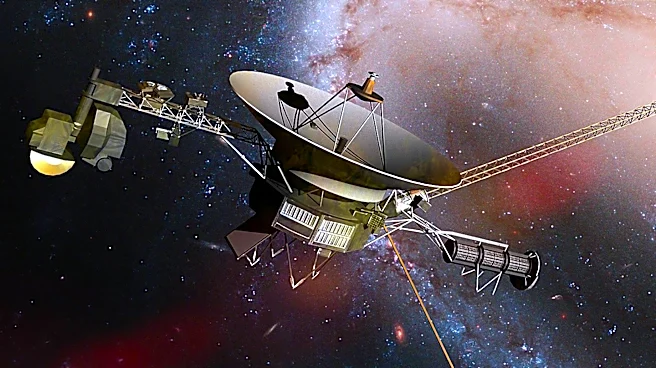
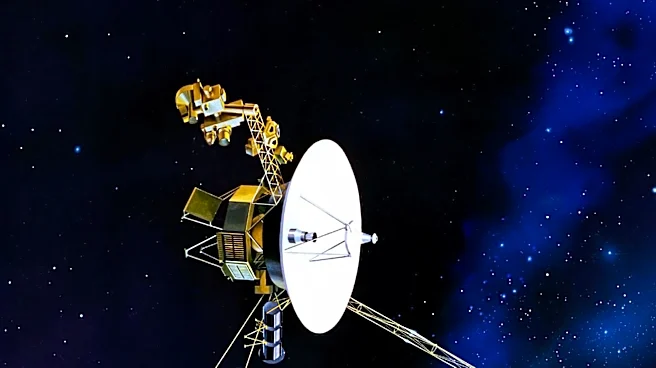
NASA's Voyager 1 spacecraft has reached a significant milestone, becoming the first human-made object to travel one light-day away from Earth. This means it now takes a full day for radio signals to travel from Earth to the spacecraft and another full day for signals to return,
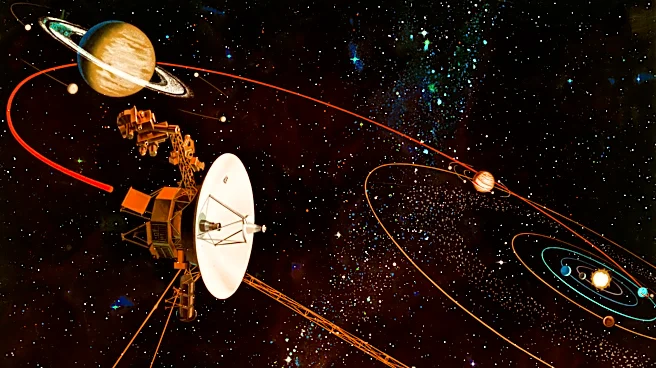
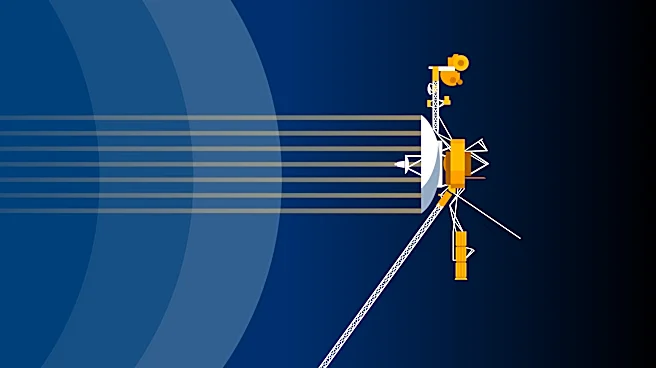
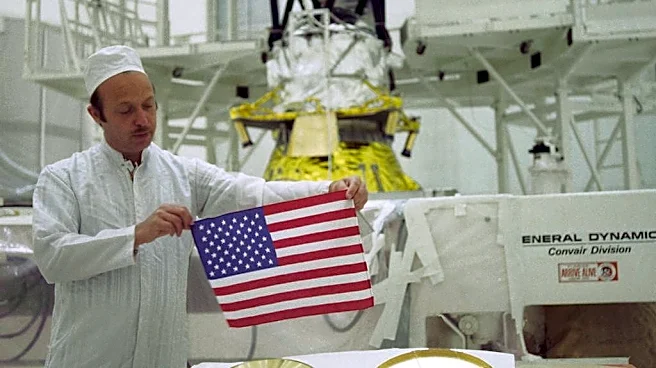
as it is approximately 16.1 billion miles (25.9 billion kilometers) from our planet. Launched in 1977, Voyager 1, along with its twin Voyager 2, was initially designed to explore the outer planets of our solar system, including Jupiter, Saturn, Uranus, and Neptune. The mission utilized a rare planetary alignment to conserve fuel, using gravitational slingshots to propel the probes. Voyager 1 crossed the heliopause, the boundary where the Sun's magnetic field gives way to interstellar space, in 2012. Its ongoing journey continues to provide breakthrough scientific discoveries about interstellar space, demonstrating remarkable engineering longevity for a spacecraft launched nearly 50 years ago.
Why It's Important?
This milestone underscores the extraordinary capabilities of human engineering and scientific endeavor, pushing the boundaries of deep-space exploration. The increasing distance of Voyager 1 highlights the challenges and advancements in long-duration space missions, particularly concerning communication. The 48-hour round-trip communication delay necessitates advanced spacecraft autonomy, as real-time human control becomes impossible. The data transmitted by Voyager 1 from interstellar space provides invaluable insights into the conditions beyond our solar system, helping scientists understand the interaction between the heliosphere and the interstellar medium. This mission has inspired generations of scientists and continues to contribute to our understanding of the universe, influencing future deep-space mission planning and technological development in areas like power management and signal processing.
What's Next?
NASA's goal is to continue operating Voyager 1 for as long as possible, performing remote engineering tweaks to maintain its functionality. While many instruments have been shut down to conserve power, three out of eleven experiments on each Voyager probe remain active, continuing to collect data. Voyager 2, the twin spacecraft, is projected to reach its own one light-day distance from Earth around 2035, continuing the legacy of this historic mission. Scientists will continue to analyze the data received from Voyager 1 to further unravel the mysteries of interstellar space, magnetic fields, and particle interactions. The lessons learned from the Voyager mission regarding spacecraft autonomy, power efficiency, and long-duration operations will be crucial for designing and executing future deep-space exploration endeavors.
Beyond the Headlines
The Voyager mission's longevity and its journey into interstellar space represent a profound human achievement, symbolizing our innate drive to explore the unknown. The 'Pale Blue Dot' photograph, taken by Voyager 1 in 1990 at the urging of astronomer Carl Sagan, offered a unique perspective of Earth, emphasizing its fragility and our place in the vast cosmos. This mission transcends scientific discovery, touching upon philosophical and cultural dimensions by expanding humanity's perception of its cosmic neighborhood. The ongoing operation of a spacecraft launched nearly five decades ago also highlights the importance of sustained investment in fundamental scientific research and engineering, demonstrating how long-term projects can yield continuous, groundbreaking insights and inspire future generations to pursue careers in STEM fields.