



What's Happening?
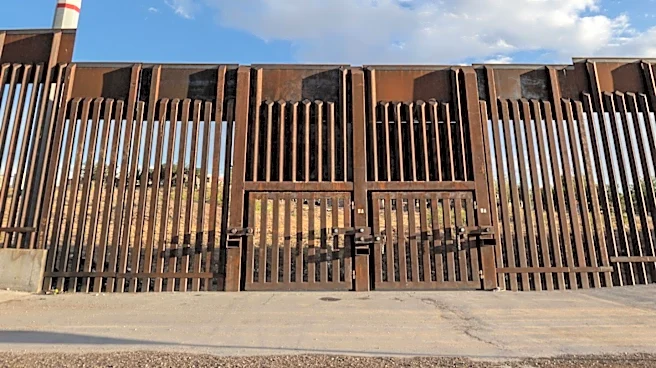
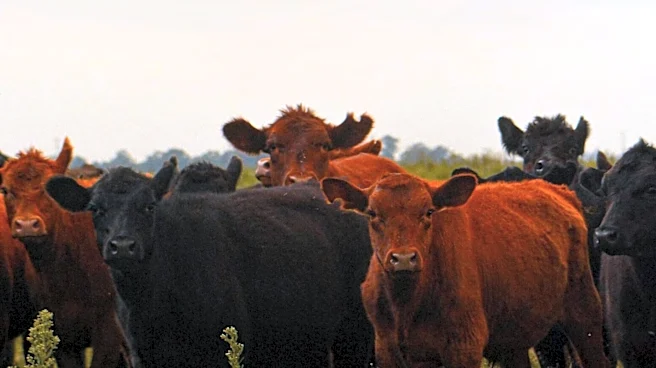
The U.S. Department of Agriculture plans to reopen part of the southern border to cattle later this month, specifically at the Douglas port, which will be the first to allow cattle from Mexico into the U.S. since the border was closed due to the New World
screwworm. This decision comes after significant efforts by Sonora, Mexico, to control the screwworm, including limiting cattle movement and implementing disease protocols. The closure had severely impacted the feeder industry and beef supply in the U.S., with beef prices rising due to a reduced herd size. The USDA has coordinated with Mexico on measures like sterile fly releases to control the parasite.
Why It's Important?
Reopening the border is crucial for the U.S. cattle industry, particularly in Arizona, where the closure has affected feedlots and beef supply chains. The decision is expected to alleviate some economic pressures by restoring cattle imports, which are vital for maintaining beef production levels. However, the reopening also raises concerns about the potential spread of screwworm, a pest that can affect various warm-blooded animals, including wildlife and pets. The USDA's enhanced inspection protocols aim to mitigate these risks, ensuring that cattle imports do not reintroduce the parasite into the U.S.
What's Next?
The USDA will closely monitor the situation at the Douglas port, using it as a model for potentially reopening other ports in New Mexico and Texas. The success of these measures will be critical in determining future actions. Additionally, the USDA is investing in facilities to produce sterile flies, which are essential for long-term screwworm control. The reopening is a test case for balancing economic needs with biosecurity concerns, and its outcomes will likely influence policy decisions regarding agricultural imports and pest management strategies.