
What's Happening?
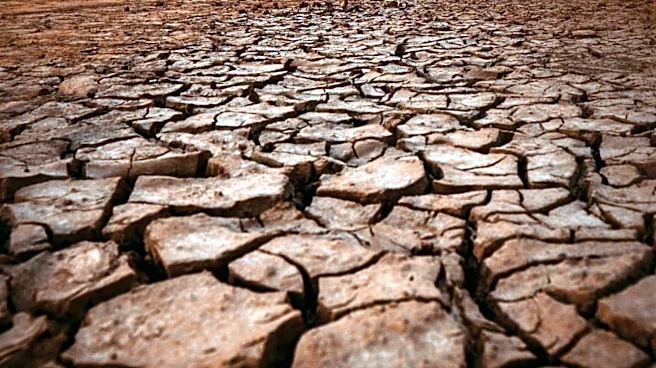
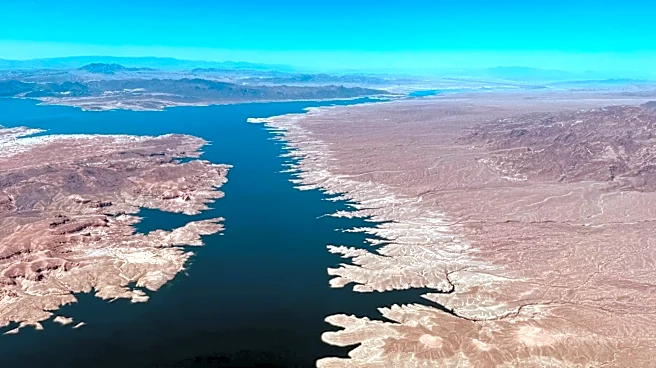
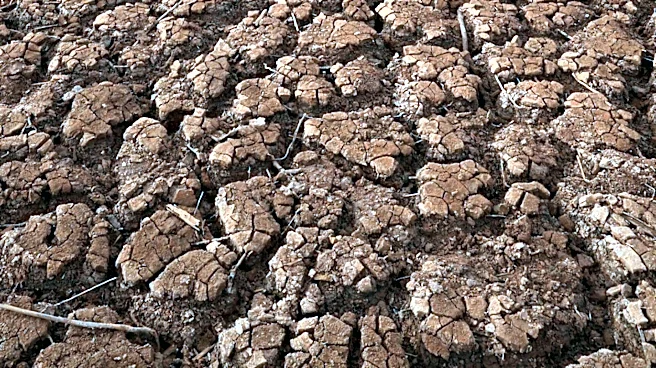
Lake Powell, the second largest reservoir in the United States, is experiencing significant water level declines due to a combination of factors including a record-dry winter, extreme heat, and long-term
climate change. The reservoir, located on the Utah-Arizona border, is currently about 23% full and is nearing historic low levels that could impact hydropower production. Marinas in the area are adapting by closing or relocating boat ramps and moving marinas to deeper waters. The situation is part of a broader crisis affecting the Colorado River, which supplies water to millions of people across seven U.S. states, tribal nations, and Mexico. Efforts are underway to manage the dwindling water resources, including water deliveries from upstream reservoirs.
Why It's Important?
The shrinking of Lake Powell is a critical issue as it highlights the ongoing water crisis in the Colorado River Basin, which is vital for agriculture, industry, and residential use across a large portion of the western United States. The low water levels threaten not only recreational activities and local economies dependent on tourism but also the ability to generate hydropower, which could have broader implications for energy supply in the region. The situation underscores the urgent need for sustainable water management practices and cooperative agreements among the states that rely on the Colorado River.
What's Next?
As water levels continue to decline, stakeholders are expected to engage in negotiations to establish new guidelines for water usage and distribution. The federal government is anticipated to announce a short-term plan for managing the river's resources, while states work towards a long-term agreement. The outcome of these discussions will be crucial in determining how the region adapts to ongoing water scarcity and climate challenges.