









What's Happening?
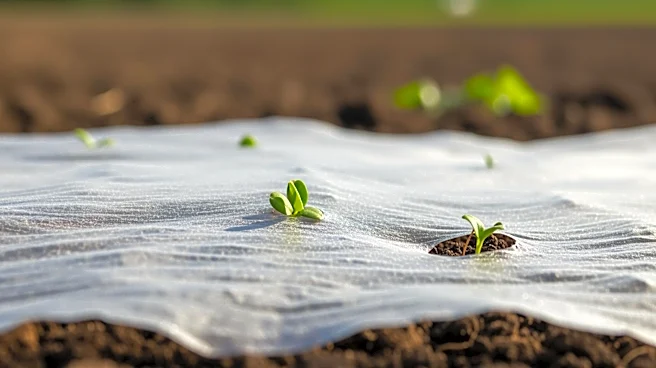
A Calgary student, Gayatri Sakharkar, has developed a biodegradable film using materials like orange and pineapple peels to address the issue of microplastic pollution in agriculture. This innovation aims to provide a sustainable alternative to conventional
plastic mulch films, which are widely used by farmers to improve crop yields but contribute to microplastic pollution. Sakharkar's project was inspired by her family's agricultural background and her interest in sustainability. Her biodegradable film was presented at the Calgary Youth Science Fair, where she won several awards, including a gold medal and the Youth Can Innovate grand award. Despite the challenges and failures she faced during the research process, Sakharkar's persistence paid off, leading to a successful and rewarding outcome.
Why It's Important?
The development of a biodegradable film by Sakharkar is significant as it addresses the growing concern of microplastic pollution in agriculture, which poses environmental and health risks. By providing an effective and sustainable alternative to traditional plastic films, this innovation could potentially reduce the environmental impact of agricultural practices. The success of Sakharkar's project highlights the importance of youth involvement in scientific research and innovation, particularly in the field of sustainability. It also underscores the potential for young scientists to contribute to solving global environmental challenges, which is crucial for the future of sustainable agriculture and environmental conservation.
What's Next?
Sakharkar plans to continue her scientific research and is considering pursuing a career in chemical engineering or academia, with a focus on environmental sustainability. For her next project, she is exploring ways to replace plastics in fisheries, indicating her ongoing commitment to finding sustainable solutions to environmental issues. Her future endeavors could lead to further innovations in reducing plastic pollution and promoting sustainability in various industries. As she continues her education and research, Sakharkar's work may inspire other young scientists to engage in similar efforts, potentially leading to broader impacts on environmental policies and practices.