
What's Happening?
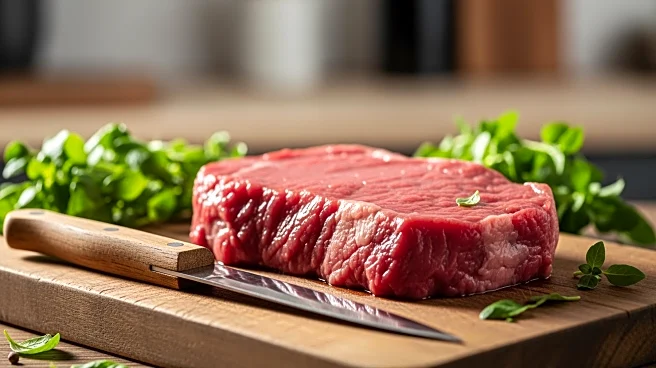
President Trump has signed an executive order to significantly increase beef imports from Argentina, quadrupling the amount under a new trade agreement. This move is part of an effort to address rising
beef prices in the U.S. by boosting supply. The agreement grants Argentina expanded access to the U.S. market, allowing for an additional 20,000 metric tons of beef imports each quarter at a lower tariff rate. The decision has sparked criticism from American cattle ranchers, who argue that it undermines their livelihoods and will not effectively reduce consumer prices.
Why It's Important?
The executive order reflects the administration's strategy to manage domestic food prices through international trade. By increasing imports, the government aims to alleviate supply constraints and curb price inflation for beef, a staple in the American diet. However, the decision has raised concerns among U.S. cattle producers about increased competition and the potential impact on their businesses. The move also highlights the complexities of balancing domestic agricultural interests with consumer needs and international trade relations.
What's Next?
The implementation of the increased import quota will be monitored to evaluate its impact on beef prices and the domestic cattle industry. The administration may face pressure from agricultural stakeholders to reconsider or adjust the policy. Ongoing discussions between the U.S. and Argentina could lead to further trade negotiations, potentially affecting other sectors. The response from consumer groups and industry associations will be crucial in shaping future policy decisions related to agricultural imports and food security.