










What's Happening?
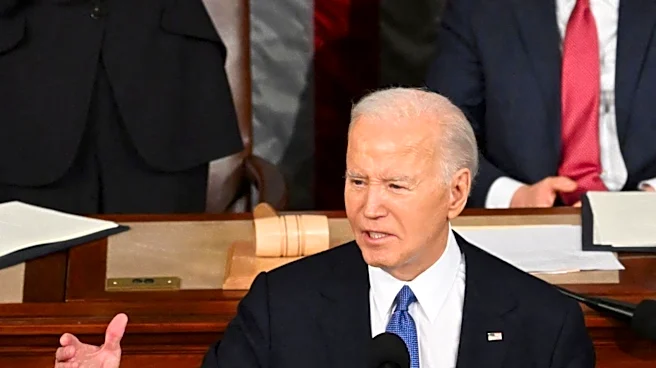
Senator Dick Durbin, a long-serving Democratic whip from Illinois, has expressed concerns about the U.S. Senate's increasing focus on nominations rather than legislation. According to a review by NOTUS, the Senate has been voting more frequently on Cabinet
and judicial appointments than on legislative matters, a trend that has been growing since the Senate lowered the threshold for most federal judges and executive branch nominations to a simple majority in 2013. By the end of 2024, nominations accounted for over 60% of roll-call votes, compared to less than 20% before 2013. Durbin noted that this shift has detracted from the Senate's legislative responsibilities. Political scientists attribute this change to increased polarization and a reduction in competitive seats, which has made bipartisan collaboration less appealing.
Why It's Important?
The shift in focus from legislation to nominations in the Senate has significant implications for U.S. governance. It suggests a weakening of the Senate's traditional role as a deliberative body focused on crafting and passing laws. This trend could lead to a legislative gridlock, where fewer laws are passed, and the Senate's ability to address pressing national issues is diminished. The increased focus on nominations also reflects deeper political polarization, which can undermine public trust in government institutions. As the Senate becomes more partisan, the potential for meaningful bipartisan legislation decreases, affecting policy areas such as healthcare, infrastructure, and economic reform.
What's Next?
If the current trend continues, the Senate may see further erosion of its legislative function, with more time dedicated to confirming nominees rather than debating and passing laws. This could prompt calls for reform, such as revisiting the rules governing nominations or finding ways to encourage bipartisan cooperation. Political leaders and stakeholders may need to address the underlying causes of polarization to restore the Senate's legislative capacity. Additionally, public pressure could mount for the Senate to refocus on legislation, especially if critical issues remain unaddressed.