





What's Happening?
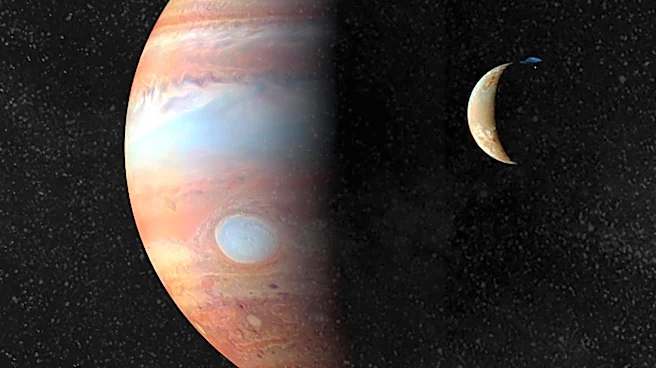
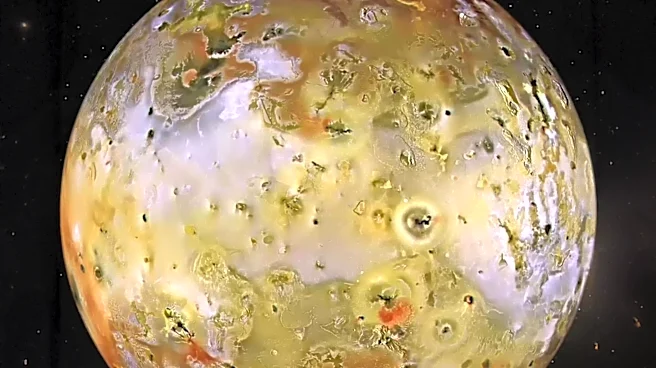
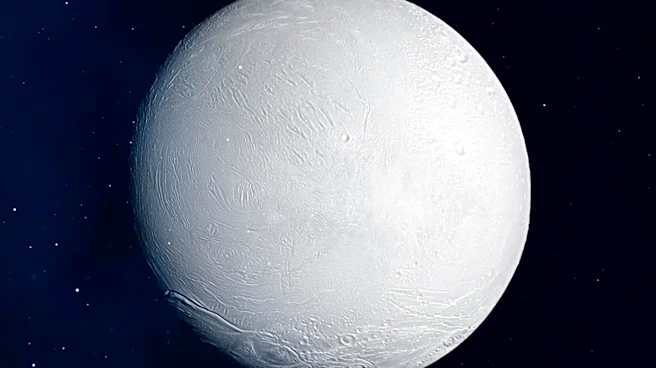
Recent studies suggest that at least six moons in our solar system may harbor oceans beneath their icy surfaces. These include Europa, Ganymede, Callisto, Enceladus, Titan, and Mimas. The presence of these oceans is inferred from various scientific measurements,
such as magnetic fields and gravitational data. These findings are reshaping the search for extraterrestrial life, as these moons could potentially support life forms in their subsurface oceans. The discovery is based on data from past spacecraft missions and improved scientific models.
Why It's Important?
The potential existence of subsurface oceans on these moons significantly broadens the scope of astrobiological research. It suggests that life could exist in environments previously thought inhospitable. This discovery could lead to new space missions aimed at exploring these moons more closely, potentially revolutionizing our understanding of life beyond Earth. The findings also highlight the importance of continued investment in space exploration and technology to uncover the mysteries of our solar system.
What's Next?
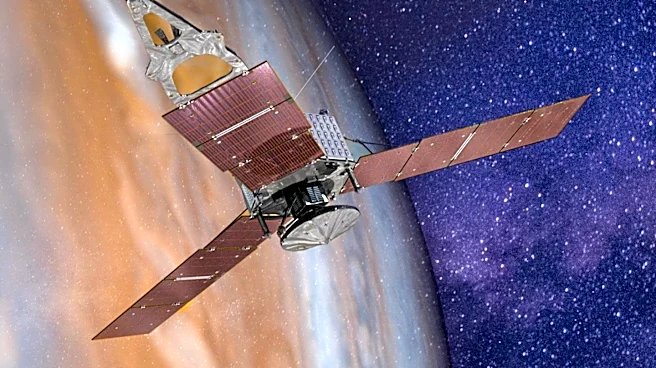
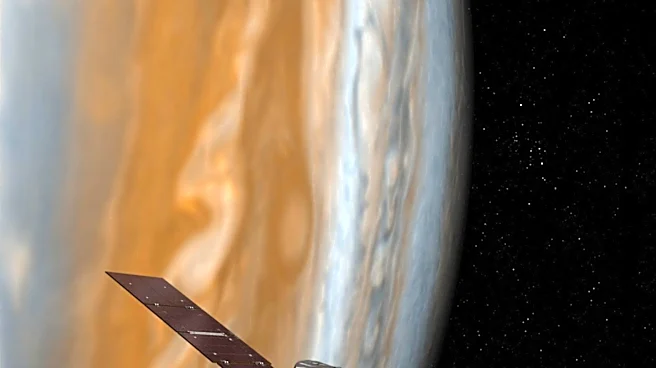
Future missions, such as NASA's Europa Clipper and ESA's Juice spacecraft, are set to explore these moons further. These missions will provide more detailed data on the composition and dynamics of the moons' oceans, helping to confirm their existence and assess their potential for supporting life. The results could influence future space exploration priorities and funding, as well as international collaboration in the search for extraterrestrial life.