





What's Happening?
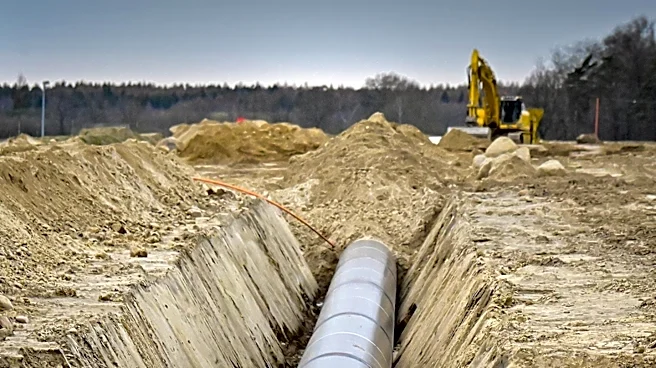
State and local officials in Fort Smith, Arkansas, including Mayor George McGill and U.S. Sen. John Boozman, have broken ground on the second phase of a five-phase water transmission line project. This phase, costing $23.2 million, will add six miles
of 48-inch water lines, continuing the construction toward Fort Smith from the Lake Fort Smith Water Treatment Plant in Mountainburg. U.S. Sen. John Boozman played a crucial role in securing $12 million in federal funding for this initiative, with Fort Smith contributing the remaining $11.2 million in matching funds. The overall project aims to enhance water service reliability and increase delivery capacity by up to 30 million gallons per day once completed. Officials present, such as Curry Jones, deputy director of the Environmental Protection Agency's water division of Region 6, emphasized the importance of robust water infrastructure, especially given the age of Fort Smith's current system.
Why It's Important?
This water transmission line project is vital for Fort Smith and over 30 surrounding communities that depend on its water supply. The increased capacity of 30 million gallons per day will not only meet current demand but also support future growth, which is critical for regional development and economic stability. Reliable water infrastructure is a fundamental necessity, and its improvement directly impacts public health, safety, and the ability of businesses to operate and expand. For instance, Chief Gary Batton of the Choctaw Nation highlighted how this infrastructure is essential for the $140 million expansion of the Choctaw Casino and Resort Pocola, which is expected to create 143 new jobs. The project demonstrates how federal and local partnerships can address significant infrastructure challenges, ensuring essential services for a growing population and fostering economic investment.
What's Next?
The current groundbreaking marks the second phase of a larger five-phase project. A third segment, also spanning six miles, is planned for future construction, ultimately leading to a total of 18 miles of new water transmission lines. The phased approach is necessary due to the substantial expense involved, allowing local communities to manage the financial burden over time. As U.S. Sen. John Boozman noted, while the region is currently in good shape regarding water supply, proactive investments are crucial to prevent future shortages and ensure long-term sustainability. The completion of subsequent phases will continue to bolster the region's water infrastructure, supporting both residential and commercial needs and facilitating continued economic development.
Beyond the Headlines
The Fort Smith water transmission line project underscores a broader national challenge concerning aging infrastructure and the necessity of significant investment. Many U.S. cities face similar issues with outdated water systems, leading to potential service interruptions and health risks. This project serves as a model for how federal funding, combined with local contributions, can address these critical needs. Beyond the immediate benefits of improved water supply, such infrastructure projects have long-term implications for regional resilience, attracting new businesses, and supporting population growth. The collaboration between state, local, and tribal entities, as seen with the Choctaw Nation's involvement, also highlights the interconnectedness of regional development and the shared benefits of robust public services.