





What's Happening?
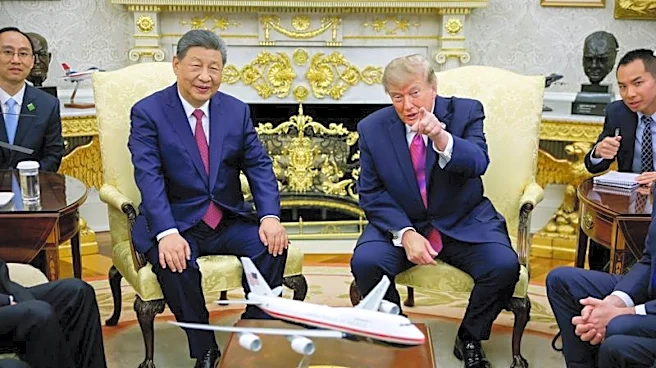
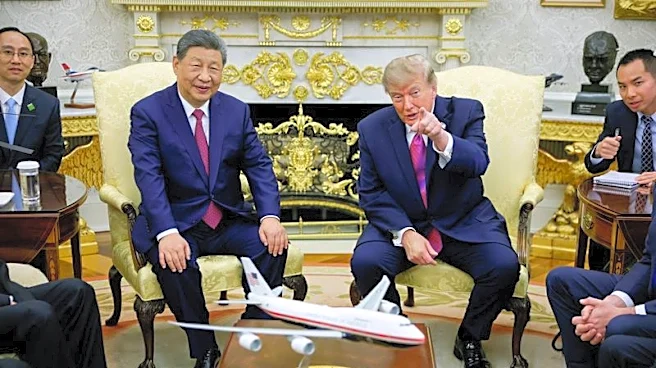
During a recent Beijing summit, President Trump reportedly raised the possibility of China purchasing U.S.-made weapons with Chinese leader Xi Jinping. This information was disclosed by U.S. Ambassador to China, David Perdue, during a Fox News interview
where he defended the administration's broader approach to arms sales. The discussion occurred during a high-level meeting between President Trump and Xi Jinping, followed by a private meeting. While President Trump inquired about China's interest in U.S. weapons, the Chinese leader's response was not disclosed. Following these reports, a U.S. State Department official clarified to the South China Morning Post that American law prohibits the sale of weapons to China and that there is currently no offer or plan for such sales to Beijing. China, through its Foreign Ministry spokesman Guo Jiakun, reiterated that its military development is driven by its own security requirements and that the country is dedicated to safeguarding world peace and stability.
Why It's Important?
This reported discussion highlights the complex and often contradictory nature of U.S.-China relations, particularly concerning military and economic ties. The U.S. has a long-standing policy of not selling weapons to China, a policy rooted in historical context and legal restrictions. The suggestion of such sales, even if exploratory, could be perceived as a significant shift or a misstep in diplomatic protocol, potentially impacting regional stability and alliances. It also underscores the ongoing tension surrounding U.S. arms sales to Taiwan, which Beijing consistently objects to. The U.S. maintains its military support for Taiwan based on the one-China policy, the Taiwan Relations Act, three U.S.-China communiques, and the Six Assurances, emphasizing that it does not support independence for Taiwan but also opposes coercion. President Trump had previously approved an $11 billion arms package for Taiwan and authorized more arms transfers than any U.S. president since 1979, making any discussion of arms sales to mainland China a sensitive issue for Taiwan and other U.S. allies in the region.
What's Next?
The U.S. State Department's clarification that American law bars Washington from selling weapons to China and that there are no current plans for such sales effectively closes the door on this particular discussion for the foreseeable future. However, the broader implications for U.S.-China relations, especially regarding Taiwan, will likely continue to be a focal point. Beijing will continue to object to U.S. arms sales to Taiwan, viewing them as interference in its internal affairs. The U.S. is expected to maintain its current policy of military support for Taiwan, balancing its 'one-China' policy with its commitments under the Taiwan Relations Act. Future interactions between U.S. and Chinese leaders will likely continue to navigate these sensitive issues, with both sides seeking to manage tensions while pursuing their respective strategic interests. The incident may also lead to increased scrutiny of diplomatic communications and the clarity of U.S. foreign policy statements.
Beyond the Headlines
The reported conversation between President Trump and Xi Jinping, despite being quickly walked back by the State Department, reveals a deeper dynamic in international diplomacy where economic leverage and strategic interests can sometimes blur established policies. It highlights the potential for unconventional approaches in high-level negotiations and the subsequent need for official clarification to maintain policy coherence. Ethically, the suggestion of selling weapons to a geopolitical rival, even if not pursued, raises questions about the consistency of U.S. foreign policy and its commitment to allies. It also underscores the ongoing challenge of managing perceptions and expectations in complex international relationships, where even informal discussions can have significant ripple effects. The incident serves as a reminder of the delicate balance required in U.S.-China relations, particularly concerning sensitive issues like arms sales and regional security.