
What's Happening?
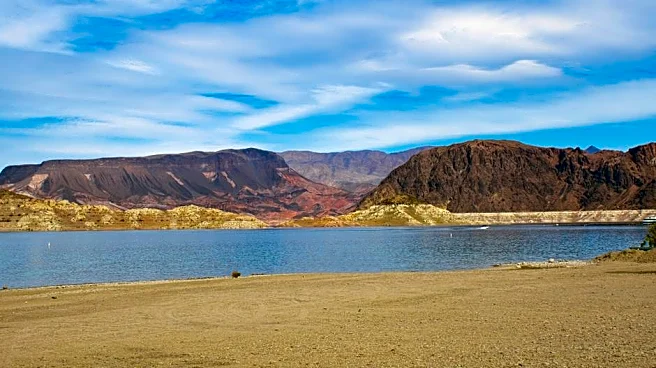
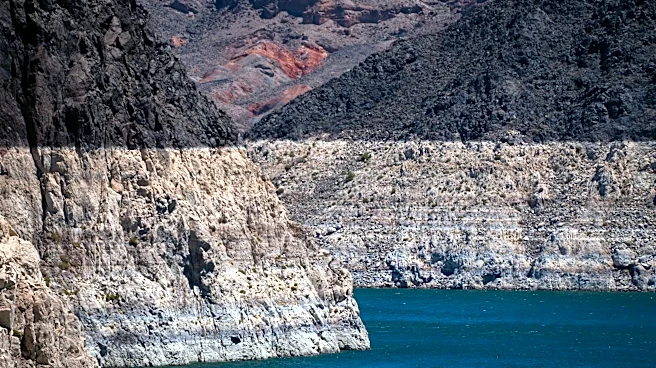
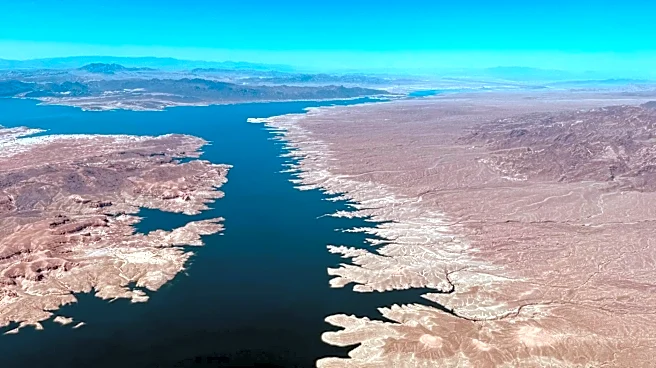
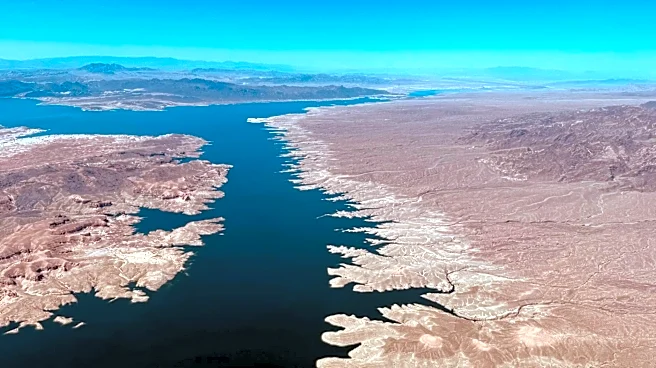
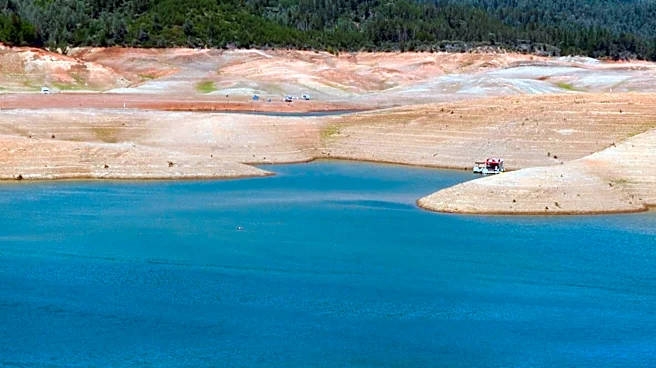
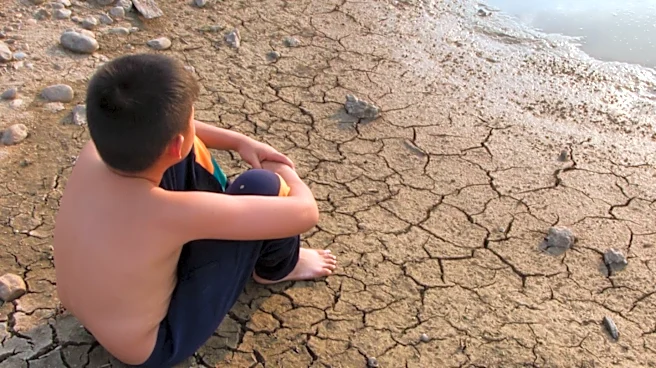
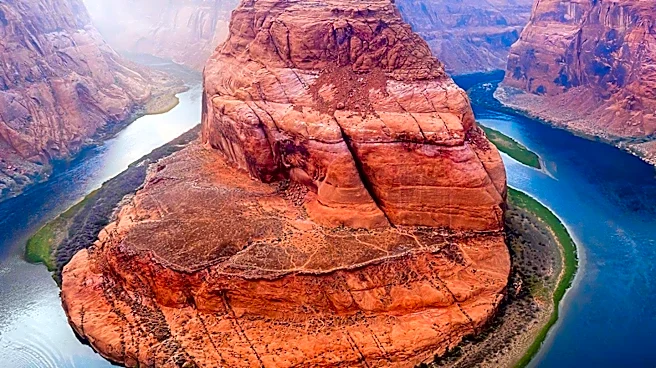
Lake Mead, the largest reservoir in the United States, has reached its lowest water level on record, with the pool elevation dropping to 1,040.50 feet. This new low surpasses the previous record set in July 2022. The reservoir, which is crucial for water supply
and hydropower in the western U.S., has been severely affected by prolonged drought conditions and low snowpack levels. The Colorado River basin, which feeds Lake Mead, supports water needs for up to 40 million people and provides hydropower to several states. The situation has raised concerns about water availability and energy production in the region.
Why It's Important?
The declining water levels at Lake Mead underscore the severe impact of climate change and drought on critical water resources in the western United States. This situation poses significant challenges for water management, agricultural production, and energy generation, as the reservoir is a key source of hydropower. The ongoing drought conditions highlight the need for sustainable water management practices and policies to address the growing water scarcity in the region. The situation also emphasizes the importance of climate resilience and adaptation strategies to mitigate the effects of extreme weather patterns.
What's Next?
Authorities and stakeholders will need to implement measures to manage the reduced water supply and address the potential impacts on agriculture, energy, and urban water use. This may involve revising water allocation agreements, investing in water conservation technologies, and exploring alternative energy sources. The situation at Lake Mead could also prompt broader discussions on climate policy and the need for coordinated efforts to address the root causes of climate change.