



What's Happening?
A U.S. District Court has issued two significant rulings in the National Association for the Advancement of Colored People’s (NAACP) lawsuit against X.AI Corp. regarding its data center in Southaven, Mississippi. The NAACP alleges that the MZX Colossus
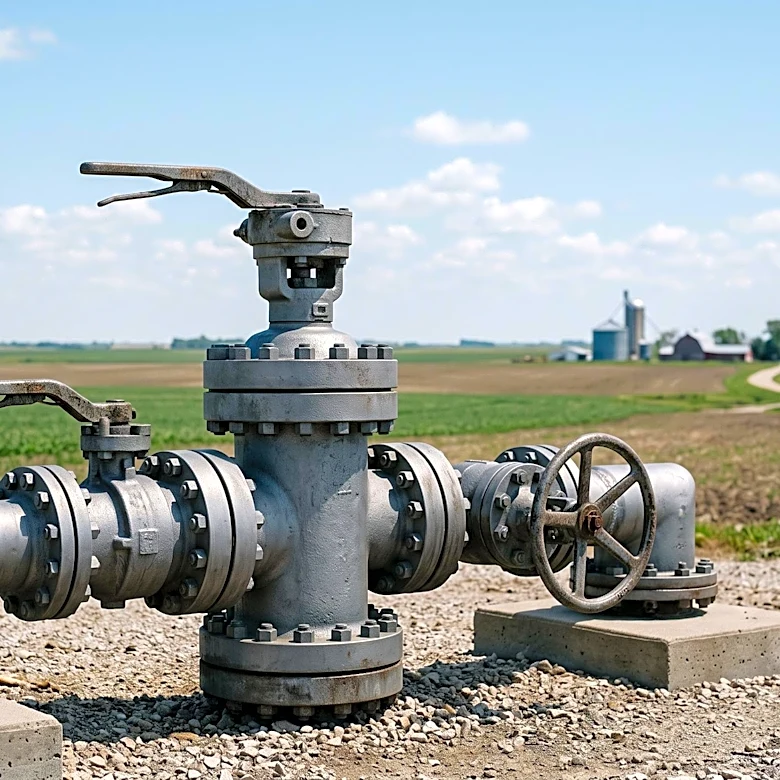
Gas Plant, which powers an X.AI data center supporting the Grok platform, operates in violation of the Clean Air Act due to unpermitted portable gas turbines. In an October 19, 2026 decision, the court rejected the U.S. government's motion to intervene and unilaterally dismiss the NAACP's claims, stating that the Clean Air Act does not grant the government such power. The government had argued that its right to intervene included the right to dismiss citizen suits and that allowing such suits to continue would intrude on its enforcement discretion. In a subsequent October 30, 2026 decision, the court also denied X.AI's motion to dismiss, ruling that the turbines, despite being mounted on trailers for portability, are not 'mobile sources' exempt from permitting under the Clean Air Act, contradicting a determination by the Mississippi Department of Environmental Quality (DEQ).
Why It's Important?
These rulings have substantial implications for environmental citizen suits and data center development across the U.S. The court's rejection of the government's power to unilaterally dismiss citizen suits affirms the role of private citizens and organizations in enforcing environmental laws, potentially empowering more such lawsuits against industrial projects. This is particularly significant given the federal government's assertion that data center infrastructure buildout is a matter of national policy. Furthermore, the court's classification of X.AI's portable turbines as stationary sources requiring permits challenges industry practices and state-level interpretations, potentially increasing regulatory burdens for data centers and other facilities using similar power generation methods. This could lead to increased litigation and stricter environmental compliance requirements for the rapidly expanding data center industry, affecting project timelines and costs.
What's Next?
Both the U.S. Department of Justice and X.AI may appeal these decisions, which would bring these key legal issues before the Fifth Circuit. The outcome of any appeal will be highly consequential, as similar citizen suit provisions exist in numerous other federal environmental statutes, including the Clean Water Act and the Endangered Species Act. A ruling affirming the government's power to dismiss citizen suits could significantly curtail environmental advocacy, while upholding the district court's decision would strengthen citizen enforcement. Additionally, the EPA is reportedly reviewing a proposed rule that might allow qualifying portable combustion turbines to be regulated as 'nonroad engines' (mobile sources), which could alter the regulatory landscape for data centers. These developments warrant close attention from environmental groups, industry stakeholders, and policymakers.
Beyond the Headlines
The X.AI data center case highlights a fundamental tension between environmental protection and rapid technological development, particularly in energy-intensive sectors like artificial intelligence. The government's argument for dismissing the citizen suit, citing national security and White House energy policy, underscores the complex interplay between economic interests, technological advancement, and environmental regulation. The court's emphasis on the statutory language of the Clean Air Act, rather than executive discretion, reinforces the principle of checks and balances in environmental governance. This case could also inspire local communities to explore alternative mechanisms, such as zoning limitations, to challenge data center developments they perceive as environmentally harmful, especially if federal enforcement is seen as insufficient or compromised by broader policy objectives. The debate over 'mobile' versus 'stationary' sources also reflects the challenge of applying existing environmental laws to new and evolving technologies.