




What's Happening?
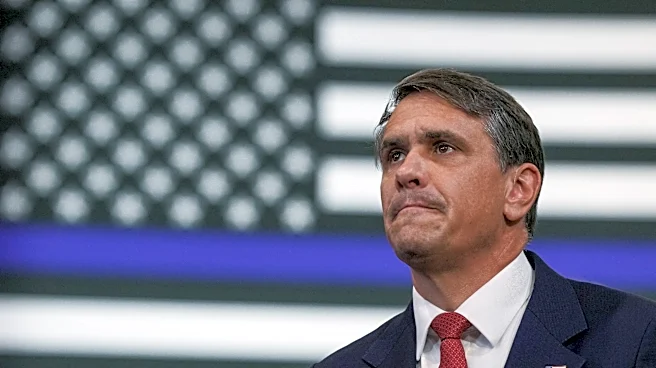
Senator Bill Cassidy (R-La.) has continued to avoid directly admitting regret for his decisive vote to confirm Robert F. Kennedy Jr. as Secretary of the U.S. Department of Health and Human Services (HHS), despite Kennedy's history of vaccine skepticism
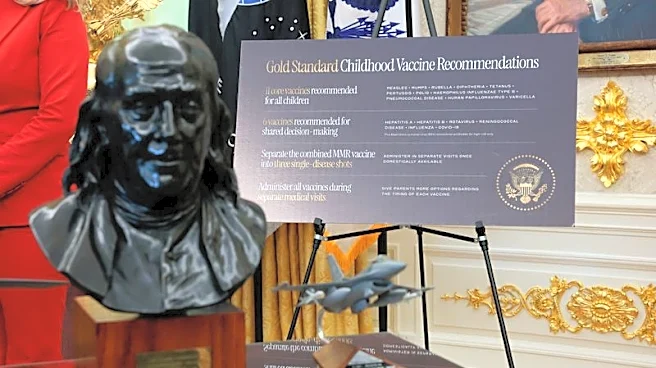
and recent changes to vaccine policy. Cassidy, a physician and chair of the Senate Health, Education, Labor, and Pensions Committee, stated that he could not have foreseen Kennedy's actions, including the alteration of the Centers for Disease Control and Prevention (CDC) website's 'Autism and Vaccines' page. He also criticized President Trump's recent executive order to split the combined Measles, Mumps, and Rubella (MMR) vaccine into three separate shots, arguing that this policy will decrease immunization rates, increase inconvenience, and raise costs for families. Cassidy emphasized that the focus should be on increasing immunization rates, not decreasing them, and that the president's policy is 'stupid' and not rooted in science.
Why It's Important?
This situation is important as it highlights the ongoing tension between political appointments and established scientific consensus, particularly in public health. Senator Cassidy's reluctance to express regret, despite the apparent contradiction between Kennedy's pre-confirmation assurances and subsequent actions, underscores the complexities of political accountability. The criticism of President Trump's executive order on vaccines by a senator from his own party signals a significant internal disagreement on public health strategy. Such policy changes, which advocate for separate vaccine shots instead of combined ones, could lead to increased logistical burdens for parents, higher healthcare costs, and potentially lower vaccination rates, thereby increasing the risk of outbreaks of preventable diseases. The debate also brings to the forefront the challenge of combating vaccine misinformation when it is perceived to be endorsed or influenced by high-level government officials.
What's Next?
The controversy surrounding Secretary Kennedy's actions and President Trump's vaccine policy is expected to continue generating debate among lawmakers, public health experts, and the public. Senator Cassidy's continued criticism may encourage other members of Congress to voice their concerns, potentially leading to legislative efforts to counter the administration's vaccine policies or to re-evaluate the confirmation process for key health officials. Medical organizations and public health advocates are likely to intensify their efforts to educate the public on the importance of established vaccination schedules and to counter misinformation. The long-term impact of these policy changes on childhood immunization rates and public health outcomes will be closely monitored, and the political ramifications for both Secretary Kennedy and President Trump could be significant as the next election cycle approaches.
Beyond the Headlines
This event delves into the broader implications of political appointments on the integrity of scientific institutions and the public's trust in health authorities. Senator Cassidy's defense, citing an inability to 'see into the future,' raises questions about the due diligence required during confirmation hearings, especially for positions that directly impact public health. The incident also highlights the persistent challenge of vaccine hesitancy, which is exacerbated when official government channels appear to validate or entertain discredited theories. The shift towards a more fragmented vaccination schedule, driven by political rather than scientific considerations, could set a dangerous precedent for other areas of public health policy. This situation underscores the critical need for clear, consistent, and evidence-based communication from health agencies to maintain public confidence and ensure effective disease prevention strategies.