








What's Happening?
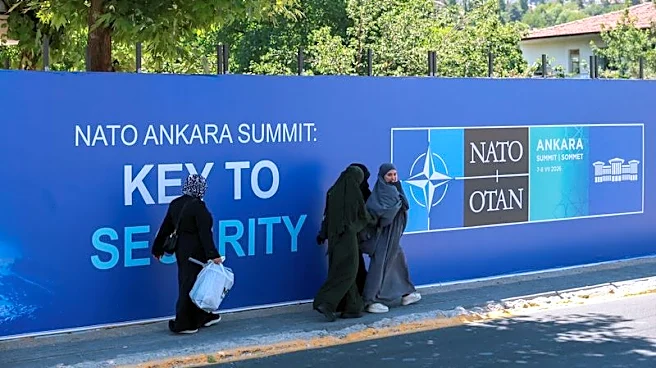
European NATO allies have largely filled the gaps left by U.S. reductions in military capabilities committed to the alliance. This development comes as NATO prepares for a summit in Ankara, where leaders will discuss defense strategies. The U.S. had previously
announced a reduction in its military contributions, including fighter jets, drones, and ships, to address potential simultaneous conflicts. European allies have responded by increasing their contributions, although some gaps, such as strategic bombers, remain. This shift aims to reduce dependency on U.S. forces and strengthen NATO's overall defense posture.
Why It's Important?
The ability of European allies to fill the gaps left by the U.S. is significant for NATO's operational readiness and strategic autonomy. It reflects a shift towards a more balanced distribution of defense responsibilities within the alliance, potentially leading to a stronger and more resilient NATO. This move also addresses concerns about over-reliance on U.S. military support, which has been a point of contention in transatlantic relations. The increased European contributions could enhance NATO's deterrence capabilities and its ability to respond to emerging threats, particularly from Russia.
What's Next?
NATO will continue to assess and address any remaining gaps in its defense capabilities, with a focus on strategic bombers and other critical assets. The upcoming summit in Ankara will provide a platform for further discussions on enhancing NATO's military readiness and cooperation among member states. European countries may need to make additional investments in defense to fully meet NATO's requirements. The U.S. will likely continue to evaluate its military commitments to NATO, balancing its global defense priorities with alliance obligations.