
What's Happening?
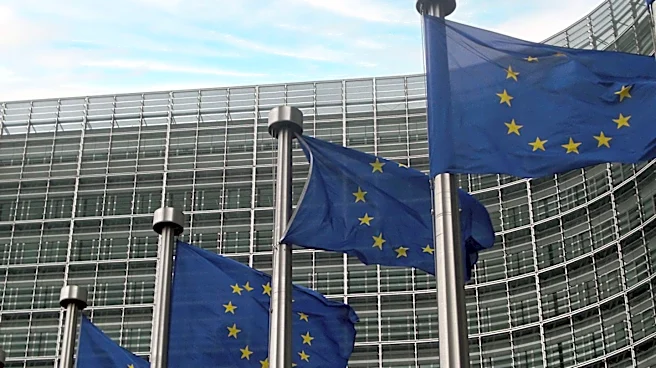
The International Organization for Migration (IOM), in collaboration with the General Authority for Borders and Customs (GABC) and with funding from the European Union, has officially reopened the Al-Dabousieh
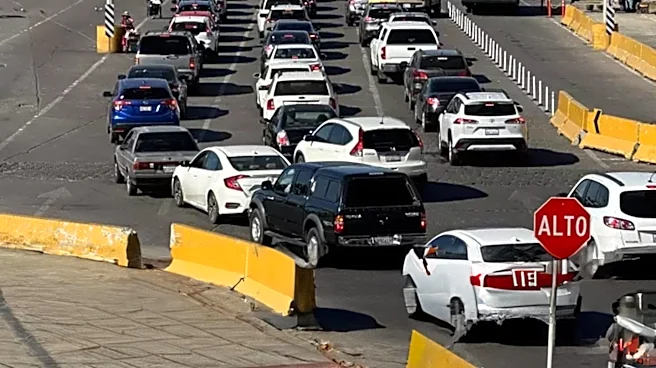
Border Crossing Point in Homs Governorate. This reopening restores a crucial gateway for the movement of people and goods between Syria and Lebanon. The inauguration ceremony was attended by high-level delegations from both countries and the European Union, led by H. E. Michael Ohnmacht, European Union Ambassador to Syria. Al-Dabousieh is a vital crossing, serving central, northern, and eastern Syrian governorates, and played a key role in trade, agricultural transport, and family movements before sustaining severe damage in 2024. The rehabilitation, funded by the EU through the DAR program, included upgrades to three administrative buildings, the main border gate, electrical and communications systems, sanitation facilities, and operational spaces.
Why It's Important?
The reopening of the Al-Dabousieh Border Crossing is a significant step towards supporting Syria's recovery and enhancing regional connectivity, which has broader implications for stability in the Middle East. For the U.S., while not directly involved in the funding, regional stability is a key foreign policy objective. Improved border management and trade routes can alleviate humanitarian pressures, foster economic recovery, and potentially reduce the drivers of irregular migration, which indirectly impacts U.S. interests in global migration management. The project demonstrates the power of international partnerships in facilitating safe and efficient mobility, supporting livelihoods, and contributing to broader recovery efforts in conflict-affected regions. The enhanced processing capacity and reduced congestion at the border are expected to boost trade and logistics, benefiting economic stakeholders in both Syria and Lebanon.
What's Next?
The rehabilitation of Al-Dabousieh Border Crossing Point is expected to strengthen border management and security, improve accessibility and transportation links, and facilitate more efficient cross-border connectivity between Syria and Lebanon. This initiative is part of a broader effort to support voluntary returns and help people rebuild their lives in dignity, as outlined by the European Union's integrated approach to voluntary returns in the EU-funded DAR program, implemented with UNHCR, IOM, and ILO. Future efforts will likely focus on sustaining these improvements, ensuring the continued smooth operation of the crossing, and potentially replicating similar rehabilitation projects at other critical infrastructure points to further support regional recovery and stability.
Beyond the Headlines
The reopening of the Al-Dabousieh border crossing signifies more than just physical reconstruction; it represents a critical step in rebuilding trust and fostering cooperation in a region long plagued by conflict. The emphasis on an integrated approach to voluntary returns, combining infrastructure, people, and procedures, highlights a nuanced understanding of post-conflict recovery. This initiative also underscores the importance of international partnerships in addressing complex humanitarian and development challenges. The long-term implications include the potential for increased economic integration between Syria and Lebanon, improved living conditions for returning populations, and a reduction in the factors that drive displacement. However, the success of such initiatives hinges on sustained political will, continued funding, and a stable security environment, all of which remain significant challenges in the Syrian context.