






What's Happening?
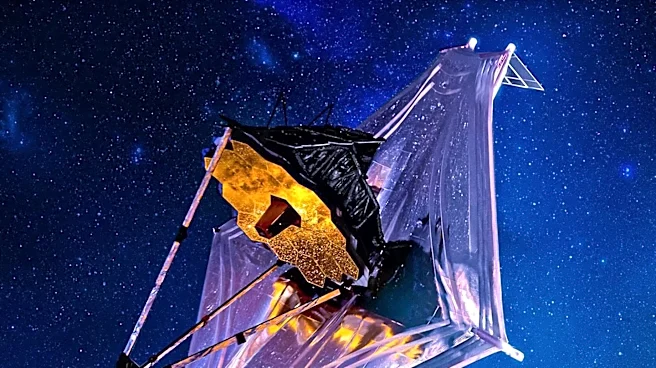
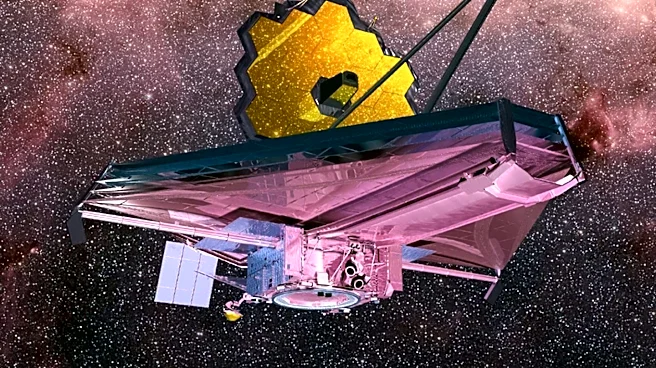
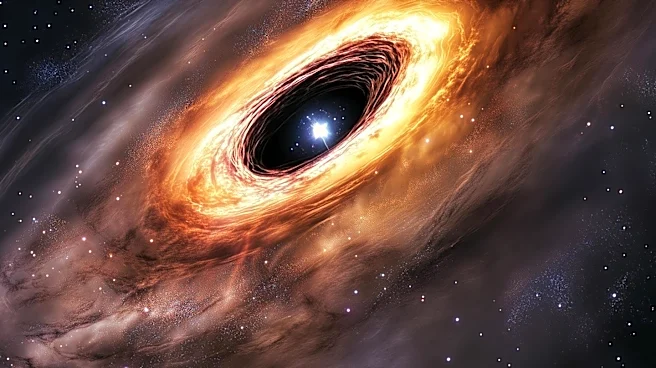
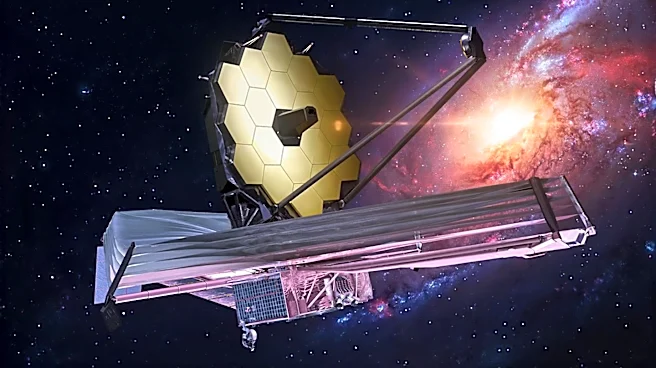
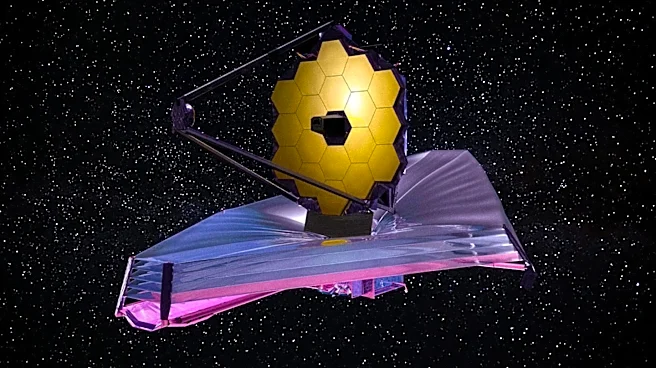
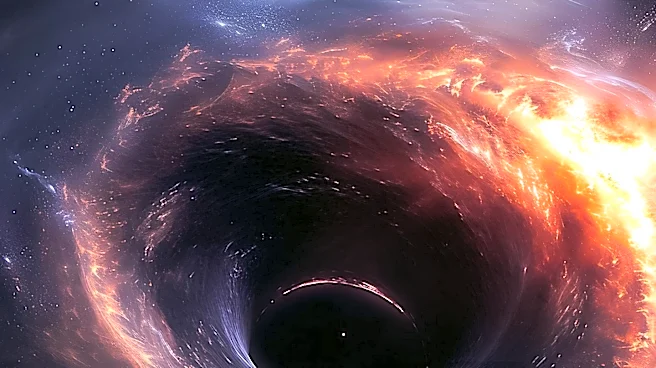
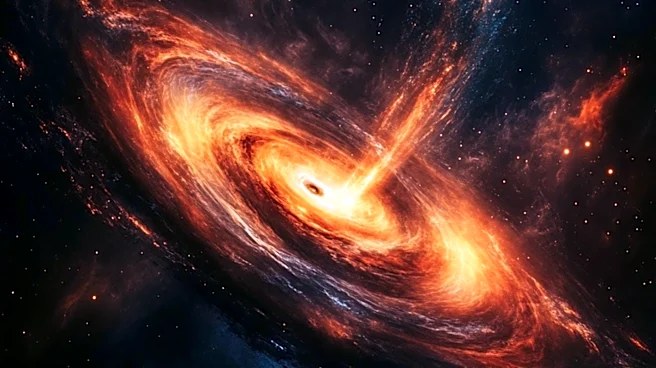
Astronomers using the James Webb Space Telescope (JWST) have measured the mass of a black hole in Abell2744-QSO1, a compact red object from the early universe. The black hole, weighing approximately 50 million solar masses, may be more massive than its
surrounding galaxy, suggesting it could have formed before the galaxy itself. This challenges the traditional view that galaxies and their central black holes grow together, with galaxies forming first. The findings indicate that in some cases, black holes might have influenced the formation and structure of their host galaxies.
Why It's Important?
This discovery has significant implications for our understanding of galaxy formation and evolution. If black holes can form before their host galaxies, they might play a crucial role in shaping the galaxies that develop around them. This could alter the current models of cosmic structure formation, suggesting that black holes might not only grow symbiotically with galaxies but also influence their development. The findings could lead to a reevaluation of how galaxies and black holes interact and evolve over cosmic time.
What's Next?
Further observations and studies are needed to confirm these findings and explore their implications. Future telescopes and instruments may provide more detailed data on similar objects, helping to refine models of black hole and galaxy formation. Understanding whether this phenomenon is common or an exception will be crucial in determining its impact on our broader understanding of the universe.
Beyond the Headlines
The study raises questions about the processes that lead to the formation of supermassive black holes and their role in the early universe. It suggests that black holes might have been more influential in the early stages of cosmic evolution than previously thought. This could lead to new theories about the origins of cosmic structures and the role of black holes in the universe's history.