






What's Happening?
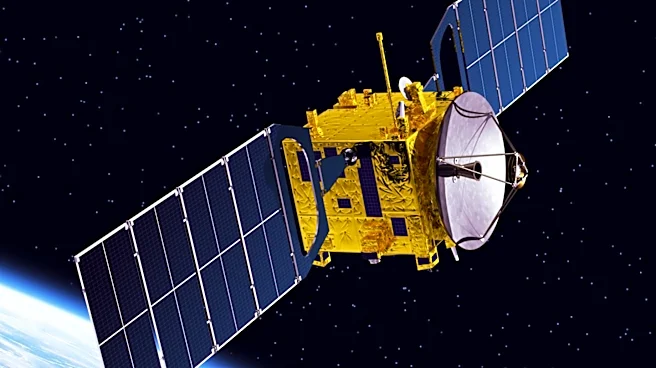
The United States Defense Intelligence Agency (DIA) has released its third edition of 'Challenges to Security in Space,' an unclassified assessment highlighting the expanding military and dual-use space capabilities of China and Russia. The report identifies
these two nations as the primary developers of technologies designed to challenge U.S. and allied space operations. These capabilities include electronic warfare, cyber operations, directed-energy systems, and kinetic anti-satellite weapons. The DIA assessment projects that China may develop space-based directed-energy capabilities capable of threatening satellites in higher orbits by the late 2020s. Russia continues to pursue similar counterspace capabilities, including electronic warfare and anti-satellite systems, and has raised concerns about potentially nuclear-armed anti-satellite capabilities. The report also notes increasing cooperation between China, Russia, Iran, and North Korea in space-related activities, with China reportedly supporting Russian space capabilities through the provision of components and technology. The assessment is current to July 2026 and emphasizes that space is increasingly being treated as a warfighting domain.
Why It's Important?
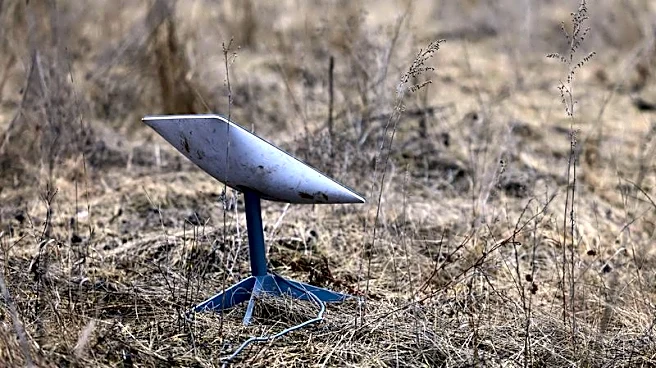
This DIA assessment is crucial for U.S. national security as it underscores the growing threats to American and allied space infrastructure. The development of advanced counterspace capabilities by China and Russia could disrupt, degrade, or destroy satellites that are vital for U.S. military operations, intelligence gathering, and critical civilian services. The report highlights the vulnerability of commercial satellites, as demonstrated by the Ukraine conflict, where Russia attempted to disrupt services supporting Ukraine. This increasing reliance on commercial providers for defense-related services creates new challenges for infrastructure protection and service continuity. The blurring lines between civilian and military space activities, coupled with growing cooperation among strategic competitors, could complicate future conflicts and increase the risk of escalation in space. The potential for nuclear-armed anti-satellite capabilities from Russia adds another layer of concern, posing a significant threat to global stability and the long-term sustainability of space operations.
What's Next?
The DIA report is intended to improve public understanding of these threats, suggesting a continued focus on space domain awareness and the development of resilient space architectures. The U.S. government and its allies will likely continue to invest in technologies and strategies to protect their space assets and counter the capabilities of adversaries. This could involve further development of defensive counterspace technologies, enhanced cybersecurity measures for space systems, and international diplomatic efforts to establish norms of behavior in space. The report's emphasis on the military importance of commercial satellites suggests that future U.S. policy may include measures to better integrate and protect private space infrastructure. Additionally, the assessment of growing cooperation between China, Russia, Iran, and North Korea indicates a need for the U.S. to monitor these partnerships closely and adapt its strategic responses accordingly. The ongoing evolution of these threats will necessitate continuous intelligence gathering and strategic adjustments to maintain U.S. security interests in space.
Beyond the Headlines
Beyond the immediate military implications, the DIA's assessment points to a broader shift in geopolitical competition, where space is becoming an increasingly contested domain. The development of counterspace capabilities raises ethical questions about the weaponization of space and the potential for irreversible damage to the orbital environment through debris generation. The report also highlights the economic implications, as disruptions to satellite services could have cascading effects on global communications, navigation, and various industries reliant on space-based data. The increasing integration of commercial and military space activities blurs traditional distinctions, creating complex legal and policy challenges regarding the responsibilities of private operators during conflict. This evolving landscape necessitates a re-evaluation of international space law and the establishment of clear guidelines to prevent an arms race in space and ensure the peaceful and sustainable use of this critical domain for all nations.