






What's Happening?
The European Union (EU) and the African Union (AU) are deepening their research cooperation through programs like Horizon Europe and Erasmus+. African institutions are already participating in these initiatives, with Tunisia and Egypt having achieved
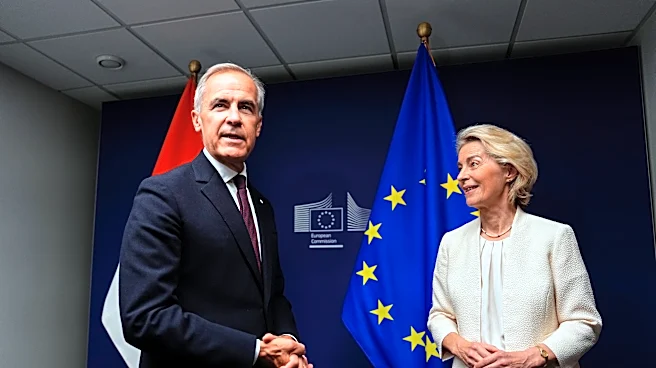
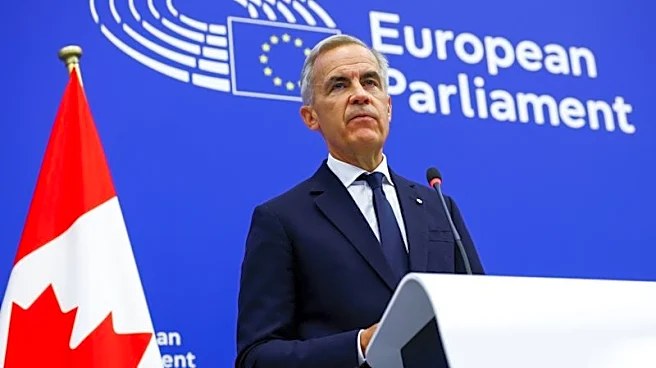
associated status with Horizon Europe. Ethiopia is also a potential candidate for association. The new Africa Initiative IV has allocated over €605 million specifically for EU-Africa research cooperation, marking a significant investment in this partnership. While participation in selected projects is a positive step, the discussion is now moving towards formal association, which would provide a more durable position, influence, and access for African countries. The concept of associate membership, as proposed for Canada, is being considered as a potential model for African nations, suggesting a new layer of European architecture that could include the AU and African countries as co-authors of rules, research agendas, and a shared future. This initiative aims to address historical imbalances and foster equitable access to structures that generate future prosperity, including research funding, education, professional mobility, technology, and climate investment.
Why It's Important?
This enhanced research cooperation is vital for fostering innovation, economic development, and addressing global challenges. For the U.S., while not directly involved, the strengthening of EU-AU ties in research and education has several implications. A more scientifically advanced and economically robust Africa, supported by EU collaboration, could become a more stable and attractive partner for U.S. businesses and academic institutions. Increased research capacity in Africa, particularly in areas like climate action and sustainable development, could contribute to global solutions that benefit all nations, including the U.S. Furthermore, the development of new institutional relationships between the EU and AU could set precedents for how major blocs engage with developing regions, potentially influencing U.S. foreign policy and aid strategies. The focus on equitable access and co-authorship in research agendas also highlights a shift towards more balanced international partnerships, which could inspire similar approaches in other global collaborations. This initiative could also lead to a more competitive global landscape for scientific talent and innovation.
What's Next?
The next steps will likely involve further discussions on the possibility of associate membership for the African Union and individual African countries within EU research frameworks like Horizon Europe. This would entail negotiating the substance of such a status, including the rules, research agendas, and shared future vision. The allocation of over €605 million through the Africa Initiative IV will facilitate numerous joint research projects and educational exchanges, leading to increased scientific collaboration and capacity building in Africa. There will be continued efforts to encourage more African countries to participate in and eventually associate with these EU programs. The success of this initiative could lead to a more integrated and collaborative research ecosystem between Europe and Africa, fostering long-term partnerships in critical areas of development and innovation. The precedent set by Canada's potential associate membership could accelerate these discussions for African nations, emphasizing the EU's willingness to create new institutional relationships.
Beyond the Headlines
This initiative goes beyond mere scientific collaboration; it represents a significant step towards rectifying historical imbalances and fostering a more equitable global partnership. Ethically, it acknowledges the legacy of colonialism and seeks to create pathways for sustained and equitable access to knowledge and resources for African nations. Legally, the creation of new institutional relationships, such as associate membership, could redefine international cooperation frameworks, moving towards models of co-authorship and shared governance. Culturally, it promotes mutual understanding and exchange, breaking down barriers and fostering a sense of shared future between Europe and Africa. In the long term, this enhanced cooperation could lead to a significant boost in Africa's scientific and technological capabilities, enabling the continent to address its own challenges more effectively and contribute more substantially to global innovation. It also signifies a shift in the global power dynamic, where African voices are increasingly integral to shaping international research and development agendas.