


What's Happening?
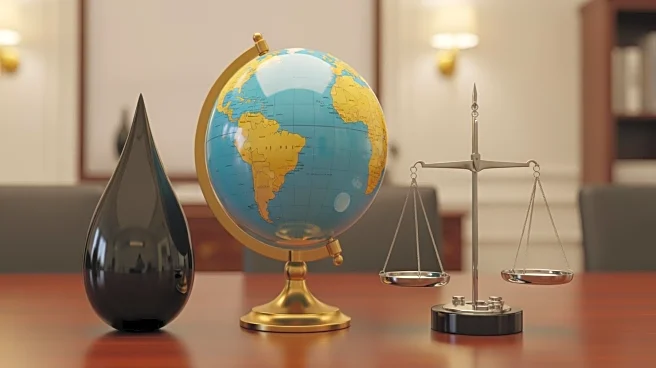
India is under significant diplomatic pressure as it attempts to balance its energy imports from Russia with its trade relations with the United States. During Russian President Vladimir Putin's visit to India, he and Indian Prime Minister Narendra Modi
discussed various agreements, including those in shipbuilding, civil nuclear energy, and critical minerals. However, the most pressing issue remains India's purchase of Russian oil, which has been a major point of contention with the U.S. The Trump administration has imposed heavy tariffs on Indian goods to pressure India into reducing its oil imports from Russia. Despite these challenges, India and Russia have announced plans to increase their bilateral trade to $100 billion by 2030, emphasizing their strategic partnership.
Why It's Important?
The situation highlights the geopolitical complexities India faces as it seeks to maintain its longstanding relationship with Russia while also fostering strong ties with the U.S. The tariffs imposed by the Trump administration could have significant economic repercussions for India, potentially affecting its export markets and economic growth. This diplomatic balancing act is crucial for India's international standing and economic strategy, as it navigates the pressures from both Western and Russian alliances. The outcome of these negotiations could have broader implications for global trade and energy markets, influencing international economic policies and alliances.
What's Next?
India is working towards finalizing a free trade agreement with the Eurasian Economic Union, which includes Russia, to diversify its trade partnerships. Additionally, India is in discussions with the European Union for a trade agreement, which could provide alternative markets for its exports. The ongoing negotiations and India's strategic decisions will be pivotal in shaping its future economic and diplomatic landscape. Observers will be watching closely to see how India manages its energy imports and trade relations amid these geopolitical tensions.