
What's Happening?
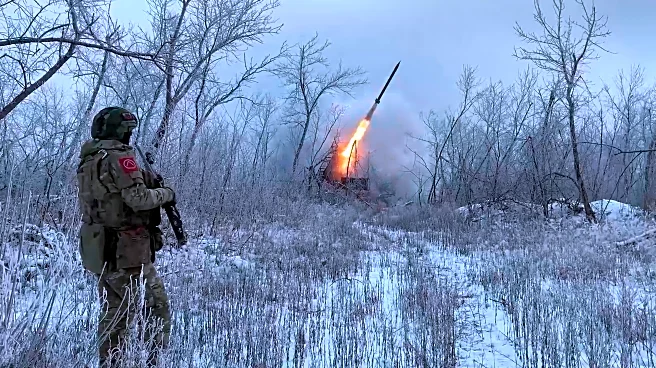
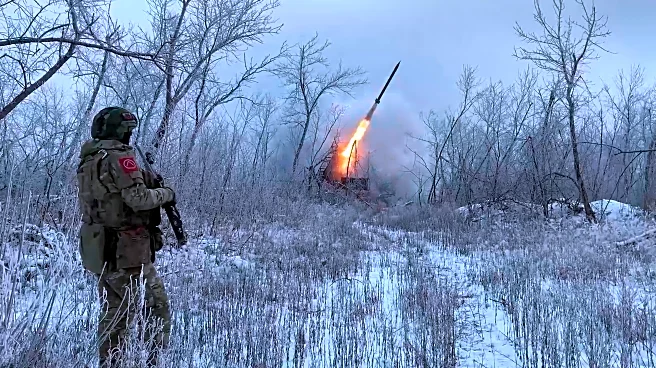
Ukraine's State Security Service (SBU) has reported successful strikes on Russian military assets in Crimea, including two Su-27 fighter jets and a MiG-31 interceptor aircraft at the Belbek airbase near
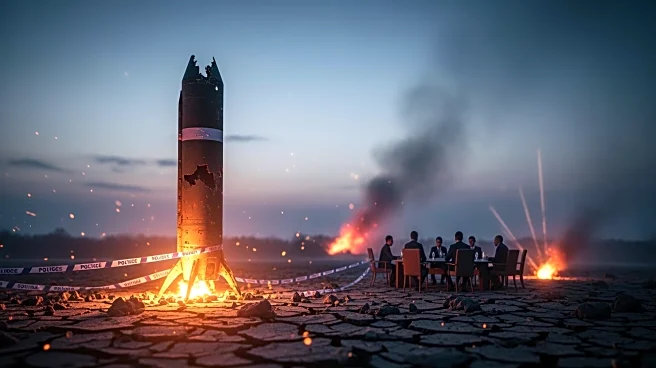
Sevastopol. These actions are part of Ukraine's broader strategy to weaken Russian military capabilities in the region. Additionally, Ukraine has targeted a Russian oil rig in the Caspian Sea, aiming to disrupt Moscow's energy revenues. These developments occur amidst stalled peace negotiations, with Ukraine's President Volodymyr Zelenskyy seeking further talks with President Trump to resolve territorial disputes, particularly concerning the regions of Donetsk, Luhansk, Zaporizhia, Kherson, and Crimea.
Why It's Important?
The strikes on Russian military assets in Crimea highlight the ongoing tensions and military engagements between Ukraine and Russia. These actions could potentially escalate the conflict, affecting regional stability and international relations. The stalled peace talks underscore the complexity of reaching a diplomatic resolution, with significant implications for U.S. foreign policy and NATO's involvement. The situation also impacts global energy markets, as disruptions in Russian oil production could influence global oil prices. The conflict's resolution is crucial for European security and the broader geopolitical landscape.
What's Next?
Future developments may include intensified diplomatic efforts to resume peace talks, with potential involvement from international stakeholders like the U.S. and NATO. The military situation on the ground could see further escalations or strategic shifts, depending on the success of Ukraine's military operations and Russia's response. The international community will likely continue to monitor the situation closely, with potential economic sanctions or diplomatic interventions aimed at de-escalating tensions.