


What's Happening?
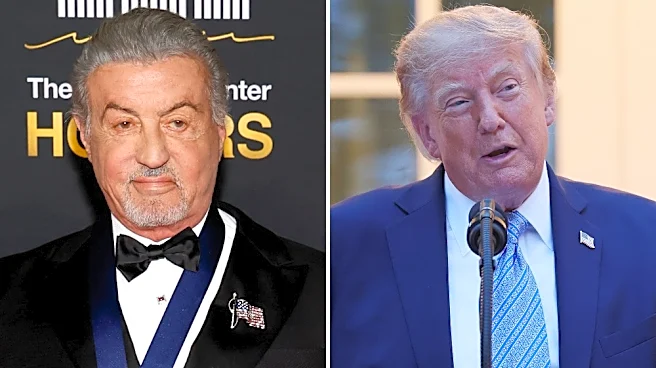
Sylvester Stallone has revealed he warned President Trump about the impracticality of his appointment as a special envoy to Hollywood in 2025. Stallone, alongside Mel Gibson and Jon Voight, was named by President Trump to 'help' the film industry. According
to Stallone, his initial reaction to the appointment was that it was 'not possible,' and he considered turning down the offer. He expressed his concerns directly to President Trump, stating that Hollywood is a corporate environment with 'feudal states' where individuals cannot dictate operations to multiple studios. Stallone emphasized that corporate entities would not be receptive to his advice on finance or how to run their businesses. Despite his reservations about the role, Stallone has consistently shown support for President Trump and his political movement.
Why It's Important?
This situation highlights the complexities of political appointments within the entertainment industry and the potential disconnect between political intentions and industry realities. President Trump's initiative aimed to revitalize Hollywood, which he claimed had lost business to foreign countries. However, Stallone's perspective underscores the deeply entrenched corporate structures and independent nature of major film studios, suggesting that external political influence might be met with resistance. The appointment of figures like Stallone, Gibson, and Voight, known for their conservative leanings, could also be seen as an attempt to bridge a perceived ideological gap between Hollywood and a segment of the political landscape. This dynamic could influence future interactions between government and the entertainment sector, potentially affecting policy discussions related to film production, incentives, and cultural representation.
What's Next?
While Stallone expressed his reservations about the special envoy role, his continued public support for President Trump suggests a potential ongoing, albeit informal, relationship. The effectiveness of such special envoy positions in influencing Hollywood's corporate decisions remains questionable, given Stallone's own assessment of the industry's structure. Future interactions between political administrations and the entertainment industry may continue to involve similar appointments, but their practical impact will likely depend on the willingness of studios and industry leaders to engage with politically appointed figures. The broader implications for Hollywood could include continued discussions about federal tax incentives for domestic productions, as suggested by Jon Voight's reported efforts, and ongoing debates about the industry's political leanings and its relationship with different administrations.
Beyond the Headlines
The narrative surrounding Stallone's appointment and his subsequent warnings to President Trump delves into the cultural and political divides within the United States. Hollywood has often been perceived as a liberal stronghold, and attempts by conservative political figures to engage with or influence it can be met with skepticism or outright resistance. Stallone's comparison of President Trump to a 'mythical character' and his personal admiration for him, despite his professional reservations about the envoy role, illustrates the complex interplay of personal beliefs and professional realities. This scenario also raises questions about the symbolic versus practical impact of such appointments, and whether they are primarily intended to foster dialogue or to make a political statement about perceived cultural battles. The incident reflects a broader societal tension regarding the role of celebrities in politics and the influence of political figures on cultural institutions.