






What's Happening?
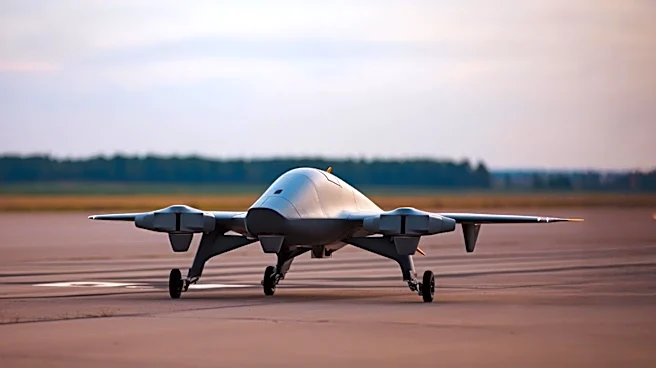
Shield AI is on the verge of completing the first full-scale prototype of its X-BAT autonomous combat aircraft system. The company anticipates the prototype will be finished by the end of October, with initial testing of the vertical takeoff and landing
(VTOL) combat aircraft scheduled to commence towards the end of the year. Armor Harris, SVP-aircraft engineering at Shield AI, stated that the testing regimen will include various horizontal and vertical tests, culminating in the first VTOL flight, which is targeted for late this year or early next year. A 45% scale model of the X-BAT was showcased at AFA’s Air, Space, and Cyber Conference, where details regarding its specifications and potential applications were discussed.
Why It's Important?
The development of the X-BAT autonomous combat aircraft by Shield AI signifies a significant advancement in military aviation technology, particularly in the realm of unmanned aerial systems. This initiative could redefine future combat operations by introducing highly autonomous platforms capable of vertical takeoff and landing, offering enhanced flexibility and operational reach. For the U.S. defense industry, successful deployment of such technology could lead to a competitive edge in global defense markets and potentially influence military doctrine. The integration of AI into combat aircraft aims to reduce human risk in dangerous missions and increase the speed and precision of military responses. This development also highlights the growing trend of private companies playing a crucial role in developing advanced defense capabilities, potentially shifting procurement strategies and fostering innovation through public-private partnerships.
What's Next?
Following the anticipated completion of the X-BAT prototype by the end of October, Shield AI plans to initiate a series of horizontal and vertical tests later this year. The ultimate goal is to achieve the first vertical takeoff and landing flight by late this year or early next year. These tests will be critical in validating the aircraft's design, performance, and autonomous capabilities. Success in these initial phases could pave the way for further development, potential military contracts, and integration into defense strategies. Future steps will likely involve more extensive flight testing, refinement of autonomous systems, and potentially demonstrations for defense officials to showcase its operational readiness and capabilities.
Beyond the Headlines
The emergence of highly autonomous combat aircraft like the X-BAT raises profound ethical and strategic questions regarding the future of warfare. The increasing reliance on artificial intelligence in decision-making processes for combat operations could lead to debates about accountability, the nature of human control in lethal engagements, and the potential for unintended escalation. Furthermore, the proliferation of such advanced autonomous systems could trigger an arms race, compelling other nations to invest heavily in similar technologies, thereby altering the global balance of power. The development also underscores a broader shift towards unmanned systems in military applications, which could have long-term implications for military personnel training, force structure, and the very definition of combat roles.