





What's Happening?
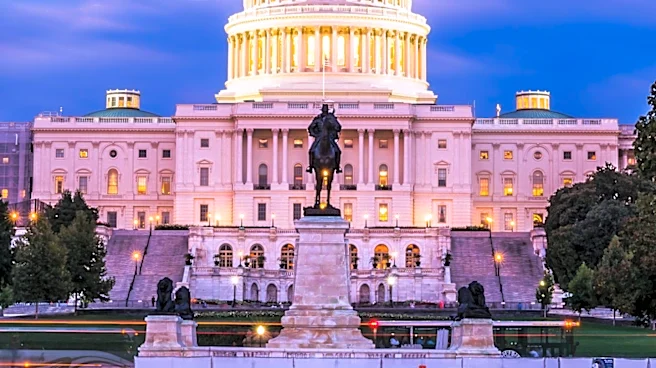
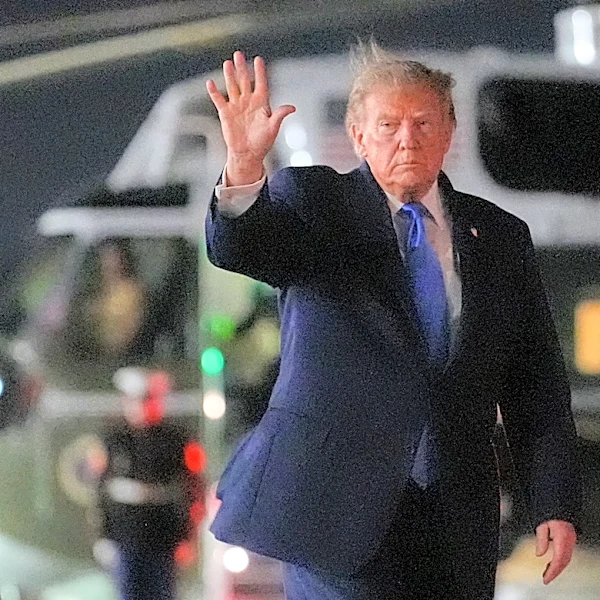
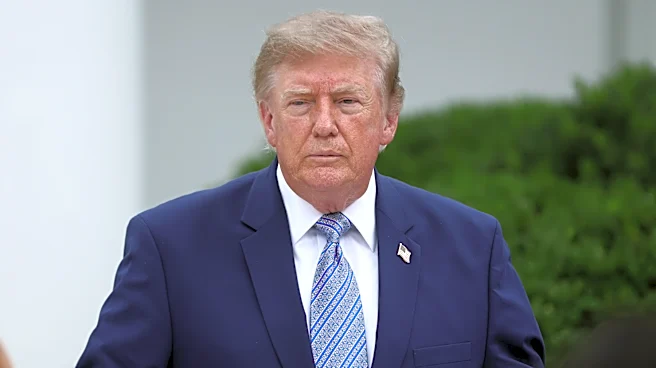
Advisors to President Trump are reportedly becoming increasingly concerned about the lack of regulation surrounding artificial intelligence (AI) in the U.S. Congress. For several years, a few representatives and senators have attempted to introduce legislation
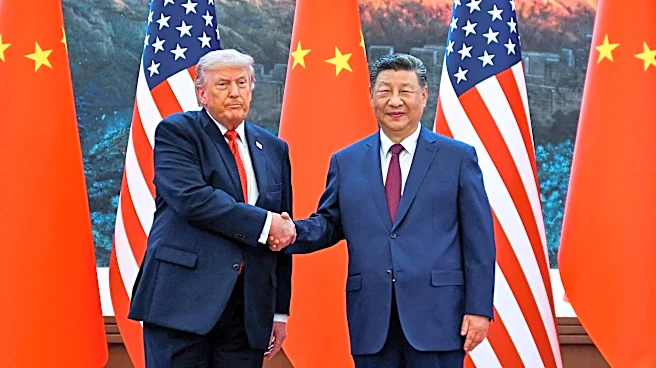
to limit AI, but these efforts have not progressed. The majority of lawmakers are only now beginning to recognize the potential dangers associated with AI. A significant obstacle to implementing effective regulation is identified as President Trump. This situation contrasts with China, where the leadership's primary concern regarding AI appears to be the protection of its own power rather than broader human safety, according to the source.
Why It's Important?
The growing concern among President Trump's advisors regarding unregulated AI highlights a critical national security and economic challenge for the United States. The current legislative inertia means the U.S. risks falling behind in establishing ethical guidelines and safety protocols for AI development, potentially leading to unforeseen societal disruptions or vulnerabilities. Without clear regulatory frameworks, American businesses and innovators in the AI sector operate in an uncertain environment, which could stifle responsible innovation or, conversely, allow for unchecked development with significant risks. The comparison to China underscores a geopolitical dimension, where different national priorities are shaping AI policy, potentially giving China an advantage in controlling the technology's trajectory while the U.S. grapples with internal political hurdles. The lack of consensus and action in Congress could leave the U.S. exposed to the negative consequences of advanced AI without the necessary safeguards.
What's Next?
The increasing apprehension among President Trump's advisors may lead to renewed calls for legislative action on AI, potentially influencing the administration's stance and priorities. However, overcoming the existing congressional gridlock, particularly with President Trump identified as a significant barrier, will be challenging. Future discussions are likely to focus on balancing innovation with regulation, and the debate over the extent of government intervention in AI development will intensify. Stakeholders, including tech companies, civil society groups, and national security experts, will likely continue to advocate for their respective positions, pushing for either more rapid development or stricter oversight. The outcome will depend on political will and the ability of lawmakers to forge bipartisan solutions to address the complex challenges posed by AI.
Beyond the Headlines
The underlying issue extends beyond immediate legislative concerns, touching upon fundamental questions of technological governance and societal impact. The reluctance to regulate AI, partly attributed to President Trump, could reflect a broader philosophical divide within U.S. politics regarding the role of government in emerging technologies. This inaction could inadvertently foster a 'wild west' environment for AI development, where ethical considerations and long-term societal implications might be secondary to rapid advancement. Such a scenario could exacerbate existing inequalities, create new forms of surveillance, or even lead to autonomous systems making critical decisions without adequate human oversight. The comparison with China also highlights a divergence in values: while China prioritizes state control, the U.S. struggles with balancing innovation, individual liberty, and collective safety, making the path to comprehensive AI regulation a complex ethical and political tightrope walk.