





What's Happening?
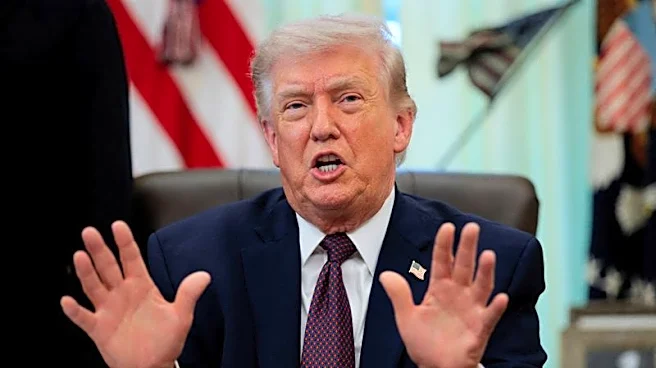
President Trump has dismissed claims that he employed the 'Madman Theory' to negotiate a ceasefire with Iran. The theory, popularized by former President Richard Nixon, involves projecting an image of unpredictability to intimidate adversaries. Trump asserted
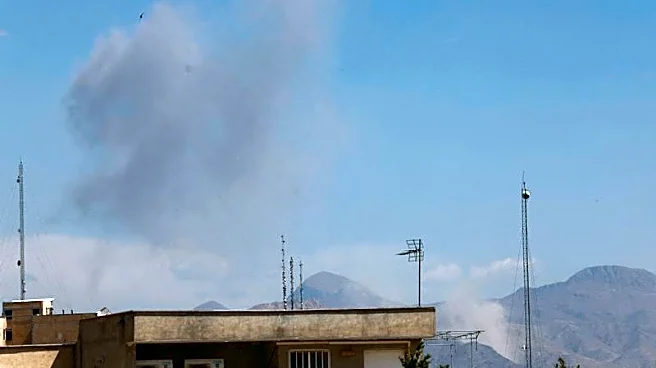
that his approach was not a strategic ploy but a genuine willingness to use military force if necessary. This statement followed his ultimatum to Iran to reopen the Strait of Hormuz or face severe consequences. Iran agreed to a conditional reopening and a two-week ceasefire, during which further negotiations are expected. Trump's tactics have sparked debate, with some viewing his unpredictability as a successful negotiation tool, while others express concern over potential rash actions.
Why It's Important?
The ceasefire with Iran is significant as it temporarily eases tensions in a volatile region, potentially stabilizing global oil markets. Trump's negotiation style, characterized by unpredictability, has been both criticized and praised. Supporters argue that it has led to diplomatic successes, such as the Abraham Accords and improved relations with North Korea. Critics, however, worry about the risks of escalation and the potential for miscalculation. The situation highlights the broader implications of Trump's foreign policy approach, which could influence U.S. diplomatic strategies and international relations.
What's Next?
The two-week ceasefire provides a window for further diplomatic engagement between the U.S. and Iran. In-person talks are expected to take place in Pakistan to work towards a final agreement. The outcome of these negotiations could impact regional stability and U.S. foreign policy. Domestically, Trump's approach may continue to polarize opinion, with potential calls for congressional action if tensions escalate. The international community will be closely monitoring the situation, as any developments could have far-reaching consequences.
Beyond the Headlines
Trump's use of the 'Madman Theory' raises questions about the ethical implications of such a strategy in international diplomacy. While unpredictability can be a powerful tool, it also risks undermining credibility and escalating conflicts. The approach may also affect public perception of U.S. leadership, both domestically and abroad. As global dynamics shift, the long-term impact of Trump's negotiation style on U.S. foreign policy and international relations remains to be seen.