







What's Happening?
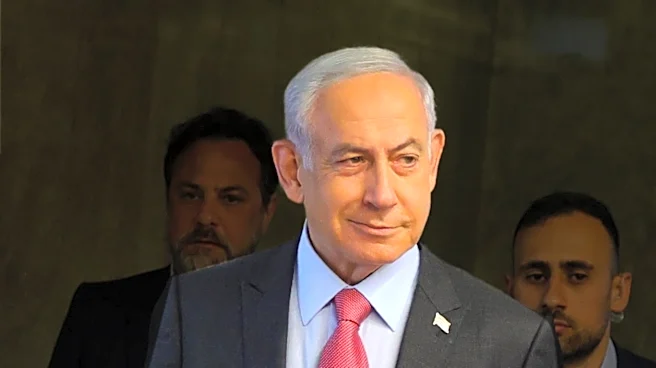
Prime Minister Benjamin Netanyahu, during a visit to Mount Hermon near the Syrian border, declared Israel's intention to prevent any armed group, described as terrorist, from establishing itself near its borders. He asserted that Israel controls the territory
from the summit of Mount Hermon to the Yarmouk River and the Mediterranean Sea. Netanyahu also reaffirmed his commitment to defeating the regime in Iran, which he labeled as terrorist, expressing confidence that the Iranian axis would eventually collapse. He was accompanied by Defense Minister Israel Katz and Deputy Chief of the General Staff Major General Tamir Yadai, receiving operational briefings from Northern Command chief Major General Rafi Milo and Commander of the 210th Division Brigadier General Yair Peli. These statements follow assessments by Israeli bodies suggesting Iran is preparing for a large-scale coordinated attack on Israel from multiple directions, involving Hezbollah, Hamas, Houthis, and pro-Iranian groups in Iraq.
Why It's Important?
Prime Minister Netanyahu's statements underscore Israel's firm stance on national security, particularly concerning its borders and perceived threats from Iran and its proxies. His declaration of intent to defeat Iran signals a potential escalation in regional tensions, as it directly challenges a major regional power. The assertion of control over a wide territorial expanse from Mount Hermon to the Mediterranean highlights Israel's strategic defense posture and its determination to maintain security dominance. The intelligence assessments regarding a potential multi-front attack from Iran's allies emphasize the complex and volatile security environment Israel faces. This situation could lead to increased military preparedness in Israel and potentially trigger preemptive actions or retaliatory measures, further destabilizing the Middle East and impacting international relations.
What's Next?
Following Prime Minister Netanyahu's declarations, Israel is likely to maintain a heightened state of military readiness along its borders, particularly with Syria and Lebanon. The stated goal of defeating the Iranian regime suggests a long-term strategic objective that could involve continued covert operations, diplomatic pressure, and potential military engagements against Iranian interests or proxies in the region. The intelligence assessments of a coordinated attack from Iran's allies will likely prompt increased surveillance and intelligence gathering by Israeli forces. Regional actors, including Iran, Hezbollah, and other groups, may respond to Netanyahu's statements with their own rhetoric or actions, potentially leading to a cycle of escalation. International diplomacy will also be crucial in managing these tensions, with global powers likely monitoring the situation closely to prevent a wider conflict.
Beyond the Headlines
Prime Minister Netanyahu's strong rhetoric against Iran and his emphasis on border security reflect a deeper strategic doctrine focused on preemption and deterrence. This approach, while aimed at ensuring national security, also carries significant risks of miscalculation and unintended escalation in an already volatile region. The concept of a 'terrorist regime' in Iran and the goal of its collapse suggest a broader ideological conflict beyond immediate security concerns. This long-term confrontation could reshape alliances and power dynamics in the Middle East, potentially drawing in other global powers. The ongoing conflict also highlights the challenges of distinguishing between state and non-state actors in modern warfare, as Iran's alleged use of proxies complicates traditional military responses and international legal frameworks. The implications for regional stability and the potential for a wider conflict remain a critical concern.