





What's Happening?
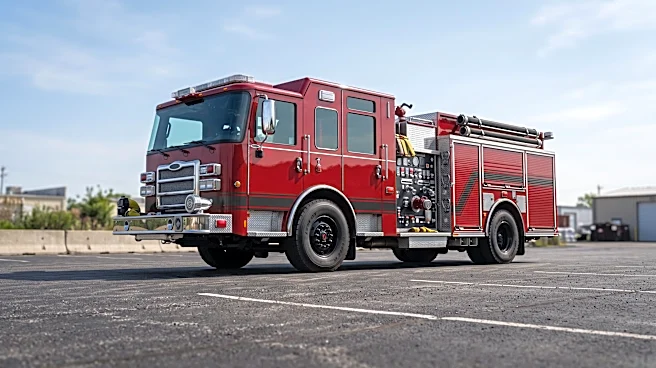
Seven Arizona cities, including Tucson, Phoenix, Tempe, Gilbert, Scottsdale, Mesa, and Peoria, have joined 80 jurisdictions nationwide in an antitrust class action lawsuit against fire truck manufacturers and private equity firms. The lawsuit alleges
monopolistic control of the market has led to significant price increases and delivery delays for essential fire equipment. Fire districts in Arizona are also considering legal action, with support from the state's attorney general. According to Dan Freiberg, president of the Professional Firefighters of Arizona, the cost of a standard pumper truck increased from approximately $613,000 in 2020 to $1.15 million in 2025, while an aerial platform truck rose from $1.6 million in 2022 to $2.17 million in 2025. Delivery times for parts have also stretched from 10 months in 2020 to over two years by 2025. The lawsuit, currently in federal court in Wisconsin, claims that private equity firm American Industrial Partners consolidated nearly a dozen small fire truck manufacturers, then combined four of them to create REV Group, subsequently closing two manufacturing plants. This, plaintiffs argue, resulted in a massive backlog and $4.2 billion in undelivered orders by the end of fiscal year 2024. Additionally, Pierce Manufacturing, owned by Oshkosh, is accused of consolidating with Boise Mobile Equipment to control the production of wildland fire trucks.
Why It's Important?
This lawsuit highlights a critical issue impacting public safety and municipal budgets across the U.S. The alleged monopolistic practices and resulting cost hikes and delays in fire truck procurement directly jeopardize the ability of fire departments and districts to respond effectively to emergencies. When apparatuses are old and broken down due to an inability to afford new ones, as stated by Dan Freiberg, it puts citizens at risk. Fire districts, particularly in Arizona, face additional financial strain due to reliance on property taxes, which are capped by Proposition 117. This cap limits their revenue growth, making it even harder to absorb the inflated costs of fire equipment. The inability to acquire new or replacement equipment not only compromises emergency response capabilities but also places a significant burden on firefighters who are forced to work with outdated or malfunctioning gear. The outcome of this litigation could set a precedent for how antitrust laws are applied to industries vital for public services and could influence future market consolidation in critical sectors.
What's Next?
The class action lawsuit will continue to proceed in federal court before Wisconsin Judge William Griesbach. Attorneys for the manufacturers and the Fire Apparatus Manufacturers’ Association have denied wrongdoing, arguing that price increases and delays are due to a surge in demand post-pandemic, not a conspiracy. Arizona Attorney General Kris Mayes has launched an investigation into alleged anticompetitive conduct, indicating potential state-level legal action in addition to the ongoing class action. The Professional Firefighters of Arizona are actively working to include fire districts in the litigation to ensure they receive a share of any potential damages. The resolution of this case could lead to significant changes in the fire truck manufacturing industry, potentially resulting in financial compensation for affected jurisdictions, regulatory oversight, or structural changes to promote competition. Communities nationwide will be watching closely, as the ability to equip first responders directly impacts public safety.
Beyond the Headlines
Beyond the immediate financial and operational challenges, this case raises deeper questions about the balance between corporate profits and public welfare. The allegations suggest that market consolidation, driven by private equity, may have prioritized financial gains over the essential needs of public safety agencies. This situation underscores the vulnerability of critical public services to market forces and the potential for anticompetitive practices to undermine the effectiveness of emergency response. It also highlights the broader debate about the role of government in regulating industries that provide essential goods and services, especially when those industries become highly concentrated. The lawsuit could prompt a reevaluation of antitrust enforcement in sectors where a lack of competition directly impacts the safety and well-being of communities, potentially leading to increased scrutiny of mergers and acquisitions in such vital areas. The ethical implications of profiting from essential public safety equipment at the expense of timely and affordable access will likely be a central theme.